


Facial recognition for event check-ins: Is it right for your event?
- Cat Thompson
- Reading time: 8 mins
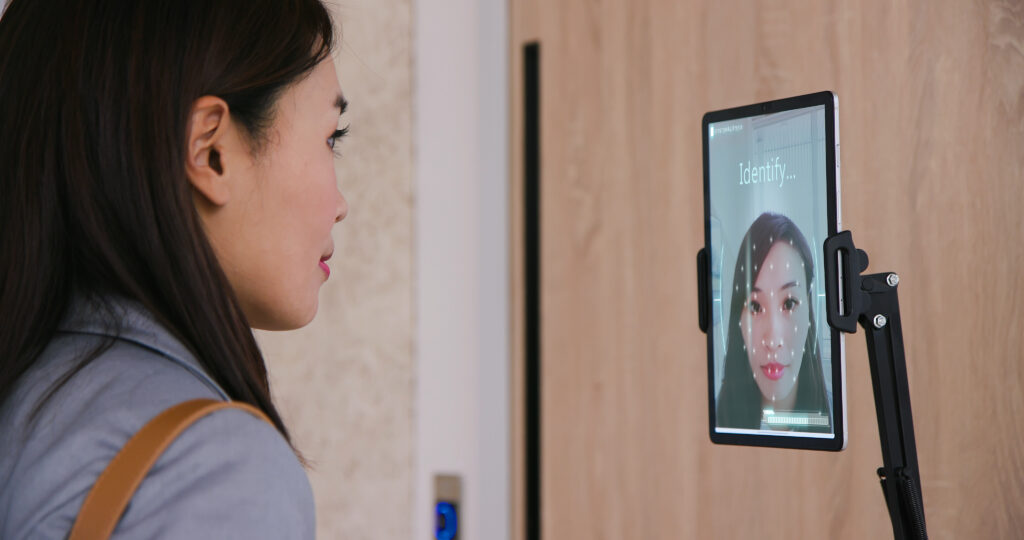
An attendee walks up to a kiosk. A camera recognises their face, their name appears on screen, and their badge prints moments later. No ticket, no email search, no registration desk.
Facial recognition is widely touted as great progressive step for onsite registration, saving time for attendees and cutting queues at the door. Event managers are tempted by the use of AI as a way to showcase their event as cutting edge.
The technology itself has matured. Testing by the US National Institute of Standards and Technology has found that leading algorithms now identify people with over 99.5% accuracy under test conditions.¹
But does it really deliver what it promises at a live event? Does it solve a problem that needed solving, and does it introduce its own issues?
Having looked at it closely, we think the honest answer for most organisers is: it’s not a silver bullet for registration. This view has come about for reasons you may not expect, so let’s walk through where facial recognition genuinely helps, where the promise stumbles, and why the humble QR code is harder to beat than the marketing suggests.
How facial recognition check-in works
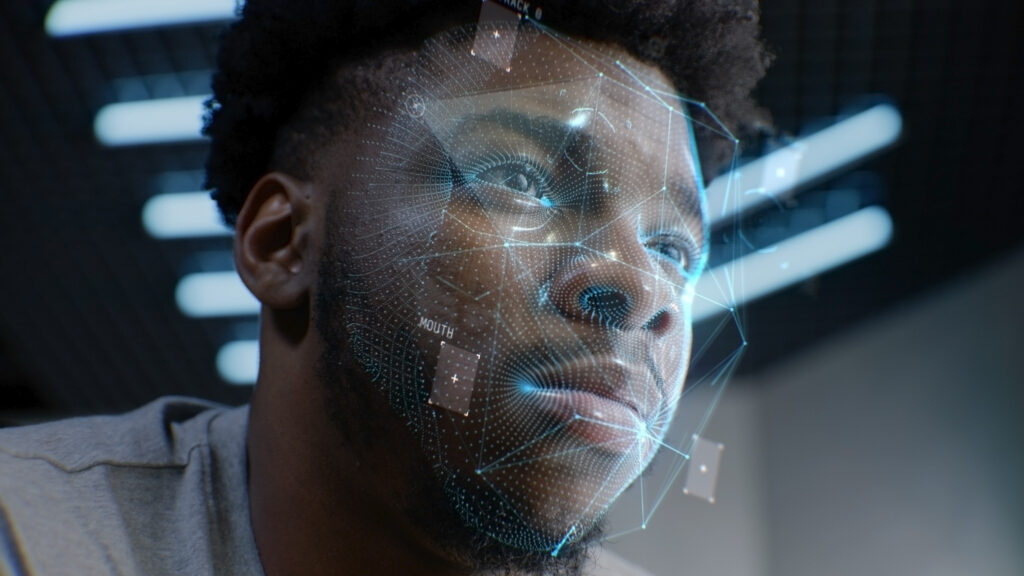
The process has three stages. Attendees upload a photo of themselves during online registration, and the image is stored securely against their booking. At the event, a camera at a kiosk or entry point scans each arriving face and maps key features, such as the distance between the eyes and the shape of the jawline, against the registered photos. On a match, the attendee is confirmed and their badge prints.
In practice it runs alongside other entry methods rather than replacing them, offered as an opt-in for attendees who want it.
The real advantages
There are genuine benefits, and they are worth stating fairly.
It reduces badge re-print fraud
A badge tied to a face is hard to game. Where organisers see attendees requesting duplicate badges to pass to colleagues or non-registered guests, facial recognition closes that gap. The person collecting the badge is verifiably the person who registered, and the system records who has already been issued one.
It can help track flow through the event
If facial recognition is used beyond the entrance, at session doors or zone entries, it can build a picture of how attendees move through the event without anyone scanning anything. That data has value for planning room sizes, catering, and future agendas. The caveat is reliability: it should be treated as a useful indicator rather than a complete record, for reasons covered below.
Those are the strongest cards in the deck. Notice that neither of them is the one usually advertised: speed at the door.
Where the promise breaks down
The photo problem
The biggest practical issue comes before the event, not at it. The system can only recognise attendees who have supplied a suitable photo in advance, and a portion of any audience simply won’t. Some forget. Some struggle to find or take an acceptable headshot. Some decline on data protection grounds.
Of those that do it, the headshot won’t be fit for purpose for all of them. They may use a social media profile where the system takes the photo from their profile – but your visitors probably weren’t thinking about making their photo a nice, standard, AI friendly one when they took their photo for their Facebook account.
For those who do comply, you have already added friction to their pre-event registration in exchange for saving them possibly a few seconds onsite. That is a poor trade for the attendee. Event marketers know that any friction in pre-registration reduces completion rates. The simpler the registration form, the more registrations you get.
Partial opt-in undermines the whole system
As soon as we accept that some attendees opt in and others don’t, we have to have multiple registration methods available onsite. The simplicity introduced by facial recognition becomes re-complicated again by having different registration flows onsite.
And there’s a quieter cost. If you are using facial recognition for event flow data inside the event, partial opt-in can invalidate it. A movement picture built from the 60% of guests the cameras can recognise tells you about those guests, not about your event. Any analysis that assumes full coverage will be misleading.
Recognition was never the bottleneck
Watch a busy registration area, and the queue rarely forms at the identification step. It forms at badge printing and around human behaviour: attendees stopping for a chat, standing in front of the printing hardware while they work out where they have to go next, or hunting through their bags while others wait behind them.
Facial recognition speeds up the one part of the process that was already incredibly quick. Scanning a QR code is at least as instant as positioning yourself for a camera, and most attendees are now well practised at it. The slow parts of check-in stay exactly as slow as they were.
It is not 100% reliable
Even the most polished consumer implementation makes mistakes. Apple’s Face ID, refined across hundreds of millions of devices, is known to confuse close family members, with relatives occasionally able to unlock each other’s phones.² Event systems face harder conditions: venue backlighting, glasses, hats, poor photos to compare to, and a haircut between registration and arrival.
Every failed match diverts someone to a manual desk, so the fallback process and the staff to run it remain a necessity. The 99.5% laboratory figure does not survive contact with a conference foyer unchanged.
Early recognition sounds better than it works
One advertised benefit is spotting attendees on their way in, before they reach the registration desk, so their badge is waiting for them. In practice this is less useful than it sounds. Recognise someone too early, and they may be picked up at the wrong station or change course on their way across the foyer, leaving a printed badge wasted at a desk they never reached. The system still cannot safely print until the attendee actually arrives at a specific point, and it needs to track who has already been issued a badge to avoid double printing. Most of the theoretical head start evaporates.
The regulatory weight is real
In the UK and EU, facial recognition used for identification is generally treated as special category biometric processing. The benefits only matter if you are willing to handle what comes with that:
- Explicit consent from each attendee, which is often required
- A clear lawful basis and a data protection impact assessment before deployment
- Strong privacy safeguards in how the data is processed
- Secure storage and defined retention and deletion rules
These obligations can bite. Mobile World Congress in Barcelona was fined €200,000 over its 2021 event for failing to complete a proper data protection assessment on its facial recognition check-in system.³
Attendee sentiment runs alongside the law. One US survey found 53% of Americans would accept facial recognition at public events if informed in advance. That figure comes from an American audience under lighter data protection rules, and even there nearly half were uncomfortable.⁴ The underlying question for any organiser is simple: do your visitors want you holding their biometric data, and is the benefit of a saved second at registration worth that risk to their trust?
Solving a problem attendees don't have
Step back and the case gets harder still. Most people arriving at an event today expect to show a QR code from their registration confirmation, and the habit is frictionless. It is no slower than a face scan, and often quicker.
There is also a strategic reason to prefer the QR route. If your event has an app, you want attendees opening it from the moment they arrive. Putting their entry QR code inside the app does exactly that, turning check-in into the first touchpoint of app engagement rather than a camera interaction that involves no engagement at all. Pair that with badge scanning tools such as The Badge Scanner for session tracking and lead capture, and you get most of the data benefits facial recognition promises from a standard printed badge, with nothing biometric stored anywhere.
Frequently asked questions
First item hidden as it is open by default
Yes, provided organisers meet the requirements for special category biometric data: explicit consent, a lawful basis, a data protection impact assessment, secure storage, and defined retention rules. The Mobile World Congress fine shows regulators act when those steps are skipped.
No. It is offered as an opt-in alongside standard methods such as QR codes, which means organisers run multiple registration routes on the day.
Not meaningfully. Scanning a QR code is at least as instant as a face scan, and registration queues are usually caused by badge printing time and attendee behaviour rather than the identification step.
Best practice, and the expectation under UK GDPR, is deletion once the event ends unless attendees have explicitly consented to retention. The provider’s deletion process is worth confirming before any contract is signed.
The short answer
Facial recognition has some genuine benefits. It makes badge fraud harder, and it can sketch a picture of attendee flow. But for almost all types of event, the drawbacks often outweigh them: the photo enrolment burden, the dual systems, the compliance workload, the reliability gaps, and the fact that it accelerates a step that was never the bottleneck.
The events it best suits are those where photo permission already exists for every guest and where facial recognition delivers tangible value inside the event itself, not just at the registration desk. For everyone else, a well-run check-in built on personalised badges and a familiar QR code gets attendees through the door just as quickly, often at less cost, with far less sensitive data to manage and nothing sensitive to store.
If you are weighing up check-in options for an upcoming event, we are happy to talk it through.