TOP QUALITY
EXPERT SUPPORT
SCALABLE SOLUTIONS
EXPRESS SHIPPING
How to choose the right event name badge
How to guides, Tips and advice

How to choose the right event name badge

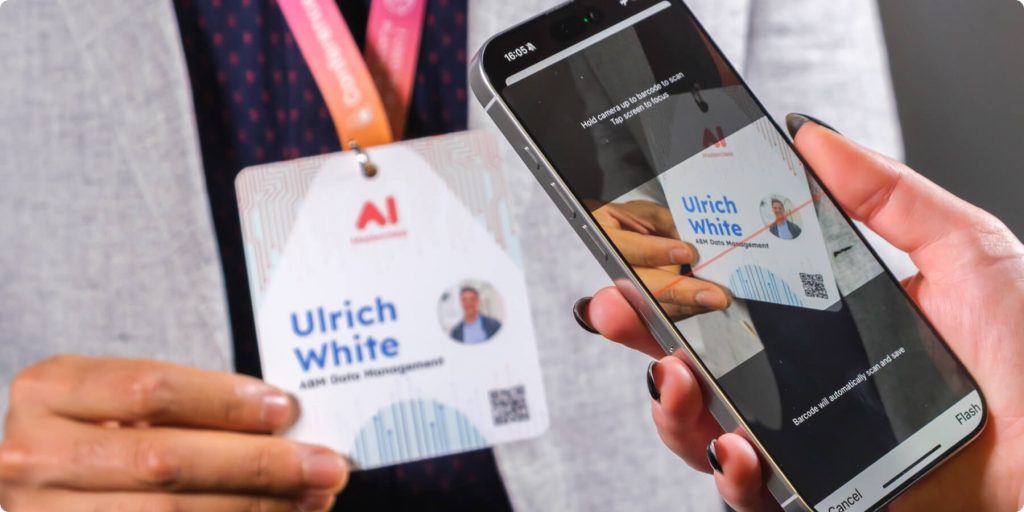
Behind the simple conference badge lies a surprisingly complex world of badge printing technologies, material choices, and design factors. Knowing how to use badges and lanyards turns them from simple needs into strategic tools, whether you’re planning a 50-person corporate workshop or an international conference with 5,000 attendees. Why conference badges and lanyards matter at events Well-made custom badges do much more than identify people. They are like miniature billboards for your brand, showcasing your logo and strengthening your organisation’s identity. They make people feel like they belong by making them wear matching credentials. They make networking easier by giving people something to talk about and eliminating the “I’ve forgotten your name” awkwardness. They have security benefits. Different coloured badges or lanyard styles make it easy to tell who is a speaker, staff member, exhibitor, member of the press, or a general attendee. This visual difference helps security staff identify people who shouldn’t be there and ensures only authorised personnel can access restricted areas. Add on some event technology, such as personalised QR codes, NFC / RFID chips, and the humble name badge can not just enhance your access control options, but it also becomes pivotal to understanding the interactions visitors have while they’re at your event. From a business point of view, professional name badges for events show that you are competent and pay attention to detail. Poorly made badges, handwritten corrections, mismatched designs, and cheap materials can wreck the all-important first impressions visitors have of your event. On the other hand, well-made custom badges show that you care about the little things, including how you value each attendee, in turn affecting how people see your whole organisation. How to choose the right event name badge: 6 key factors When people talk about badge printing, the conversation can quickly turn technical, and you start talking about the merits of different printers. We find it’s easier to start with the badge. Here are six factors that will help us narrow down the badge type. Then we can look at which printers will go with that badge type. Sustainability Budget Content – specifically, how much needs to be printed on the badge Onsite print capability Durability Technology (e.g. embedded RFID chip) Let’s go through these in more detail. Sustainability and eco-friendly badge materials Corporate clients increasingly have environmental targets baked into their event briefs. It’s no longer a tick box – it’s a commitment, and shows the event’s values. Choosing eco-friendly materials such as recycled, recyclable or compostable badges reduces waste and aligns with CSR goals, while still looking polished and professional. Badges that minimise plastic or use biodegradable stocks help demonstrate that your company takes sustainability seriously, without compromising on quality or finish. However you’ll need to balance this with durability. On the whole, truly eco materials don’t last for more than a couple of days, whereas PVC will last for years (too long, you might say!). So it’s easy to avoid plastic for a one-day, indoor event. If your badge has to take on a couple of outings to the networking bar, or face the elements outdoors, you may want to consider a recycled PVC or face up to the likelihood of having to reprint some badges onsite. Budget considerations for event badge printing Badge decisions need to fit the overall event budget, but it’s worth thinking in terms of value, not just unit cost. A basic printed card might be inexpensive per piece, but if it’s the first impression attendees get on arrival at your event, do you want it to feel more premium? If you plan to integrate QR codes or RFID elements for session tracking and access control, a slightly higher-end badge can deliver efficiencies elsewhere, reducing queues at registration or staff time managing entry points. If you run multiple events under the same event brand, you can find cost efficiencies by printing for the year upfront or even drop the ‘2025’ from the logo when it appears on the badge, so those backgrounds are good for 2026, and you can have them pre-branded in bulk. Badge content, size and layout design Event badges often carry more than just a name. They might include job titles, company, session tracks, QR codes and sponsor logos. More content means you need a badge format and printer capable of clear, readable output, especially if you plan to segment by role or access level, for example, distinguishing speakers from delegates.  If the badge will display lots of data or branding elements, consider materials and sizes that lend themselves to clean layouts and high-resolution printing, ensuring attendees can absorb the information at a glance. For example, a credit-card size badge might suit an event where your design just incorporates the event brand, attendee name, company and a QR code. But once you start adding more logos, the wifi password, an attendee type bar etc. you’ll quickly be hankering for more space. If you want a detailed event agenda on the back, you may want to ‘supersize’ yourself and go up to an A6 badge. And one last tip here – it’s no fun straining to see the name of that person that you’ve started a conversation with but can’t remember the name of (especially when you’re trying not to get caught). So allow space for a name that’s nice and big. Mock up your badge in Word, Canva or your favourite design drafting app. Just put in placeholder boxes for the logos. Type a long name and company as an example. Print it out. Check if you can read it easily from 6 feet away. You can? Now you know what size badge you’re looking for! Onsite conference badge printing capability In a corporate environment, last-minute changes happen. Walk-in registrations, late speaker updates, and reprints for lost badges. Onsite printing lets you respond, keeping check-in smooth and professional. You may even want to print all of your badges onsite. Find out more information about event badge printing here. Onsite systems

Pre-printed badges vs. onsite event badge printing
Event tech, How to guides, Tips and advice

Pre-printed badges vs. onsite event badge printing

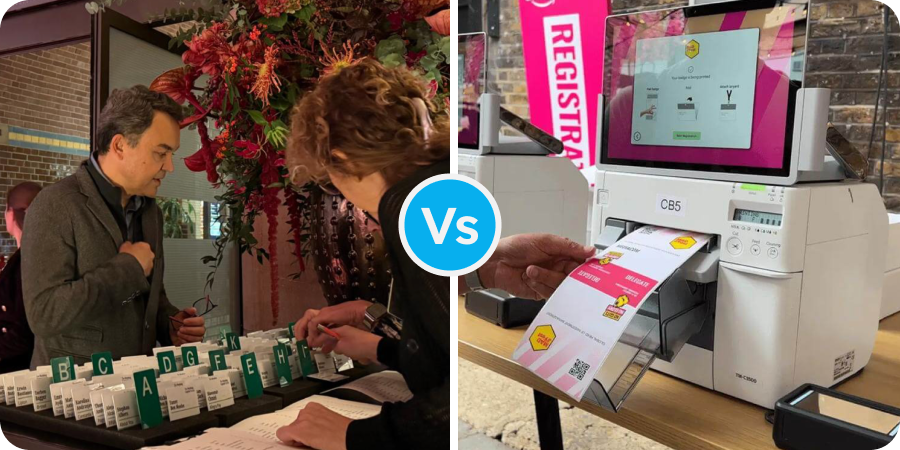
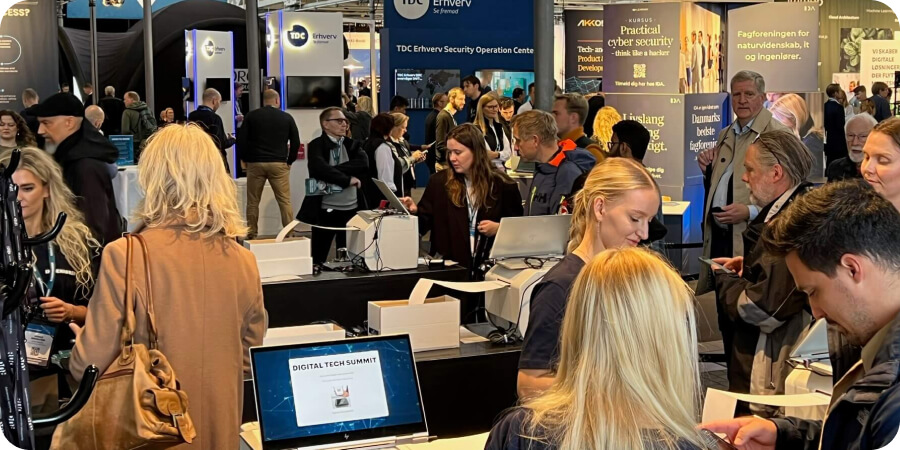
When you go to a conference, the first interaction you often have is collecting your name badge. It’s a small thing that has a big impact on everything from first impressions to how well you network. But there is a key decision behind that simple badge: should you print your conference badges ahead of time or use onsite badge-printing equipment? Event planners make big budget savings and reduce queues by simply picking the appropriate badge-printing method for their event. Pre-printed badges vs. onsite event badge printing? There isn’t one way to print badges that works for everyone. The method you choose will impact your workflow, budget, and the quality of your custom badges. It will change the arrival experience and so reflect on the event, overall experience and your brand. You can get pre-printed conference badges made before your event using professional printing services or your own equipment. Designs are finalised, attendee data is combined, and event name badges are made, often weeks in advance.  These badges come ready to hand out, sometimes with lanyards and badges already put together. For small events where you know the majority of who will be attending well in advance, this is often the best model. Onsite badge printing is a very different approach. You don’t have to personalise any badges ahead of time; instead, badge-printing equipment at your event prints name badges as delegates arrive, on demand. A name badge printer prints attendees’ credentials in real time as they check in, pulling information directly from your registration system. Understanding how badge printer technology and materials work makes it possible to choose between these two options.   Badge printer technologies Several printing technologies are competing for your attention when it comes to event badge printers.  Printers that work directly with heat ‘Direct thermal’ printers are a common type of onsite badge printer. They use badge materials that go from white to black when they come into contact with the printer’s thermal printhead. Just heat and paper that has been treated in a special way to react to the heat. No ink, ribbon, or cartridges. These name badge printers are great at printing black on white quickly. They are generally small and fit easily on registration desks, and because they don’t need any supplies other than the badge stock, they’re reliable, and operational costs are easy to predict. What are the limitations of thermal printing? Direct thermal printing produces only black-on-white output. The badge material must already have any logos, branding, or colour-coding on it. The printer can only add names, companies, and job titles for each attendee.  Badges also fade over time when exposed to heat or sunlight, which is fine for events that last only one day but not so great for conferences that last several days and where people keep their badges as souvenirs. Thermal transfer printers ‘Thermal transfer’ badge printing machines use ribbons (like a thin plastic film) to transfer ink onto badge materials, giving them more options. This method works with regular paper, synthetic materials, and even some kinds of plastic. What is the main benefit over ‘direct thermal’? You can use regular paper stock, which is much cheaper than heat-sensitive materials. Thermal transfer also makes prints that last longer and won’t fade.  Thermal transfer printers print black text with sharp quality but are less suited to images unless they are simply black and white images. Even grayscale images are a struggle for these printers. Having a print ribbon also means you have another consumable to change and keep stocked up on. Inkjet badge printers Inkjet badge printers can give a little more flexibility to your onsite badge printing. Depending on the model of printer, you can print on stock such as ‘Butterfly Peel & Fold Badges’ and may be able to print in full colour onsite, producing bright, full-colour name badges that can be personalised with photos, logos, and detailed graphics. Inkjet badge printers often produce results comparable with pre-printed ones. You can print everything, including artwork onsite so last-minute design changes won’t ruin your event.  What are the trade-offs? Inkjet printers can be more expensive to run than thermal printers, mainly due to ink costs, and for the really fast ones that are best suited to onsite use, it can be more expensive to hire inkjet badge printers. Printing speeds are typically slower: 6 to 10 seconds per badge, compared to 1 to 2 seconds for thermal options. Printers that print directly on cards (PVC) Direct-to-card badge printing makes plastic badges that look like credit cards or ID cards for high-end conferences. These printers for conference badges use dye-sublimation technology to print pictures directly onto PVC card stock. PVC badge printers make prints that look great and last a long time. These custom badges can withstand events lasting a lot longer than one day without showing wear. They can also include access-control encoding and give off a high-end, professional look. What are the problems with dye-sub? These name badge printers cost a lot of money, usually between £1,000 and £4,000. PVC card stock costs a lot more per unit than paper badges, and it takes longer to print, usually 30 to 45 seconds per card. You need users who are trained on these printers to set up and run them properly. For most conferences, direct-to-card printing only makes sense if the extra cost is worth it for security, durability, or prestige. The conventional way: Pre-printed conference badges For good reasons beyond tradition, pre-printed badges are still the most common type at many events. The benefits of pre-printing When you don’t have to worry about the limitations of onsite equipment, you can design a lot more. Professional print shops can make name badges for events using methods that no portable badge printing machine can match. These include printing on thicker card stock with metallic inks, speciality papers, textured finishes, die-cut shapes, lamination, and spot UV coatings. These custom badges make a statement that basic thermal printing can’t match

Scroll to Top