

How to choose the right event name badge
- Nick Thompson
- Reading time: 10mins
Behind the simple conference badge lies a surprisingly complex world of badge printing technologies, material choices, and design factors. Knowing how to use badges and lanyards turns them from simple needs into strategic tools, whether you’re planning a 50-person corporate workshop or an international conference with 5,000 attendees.
Why conference badges and lanyards matter at events
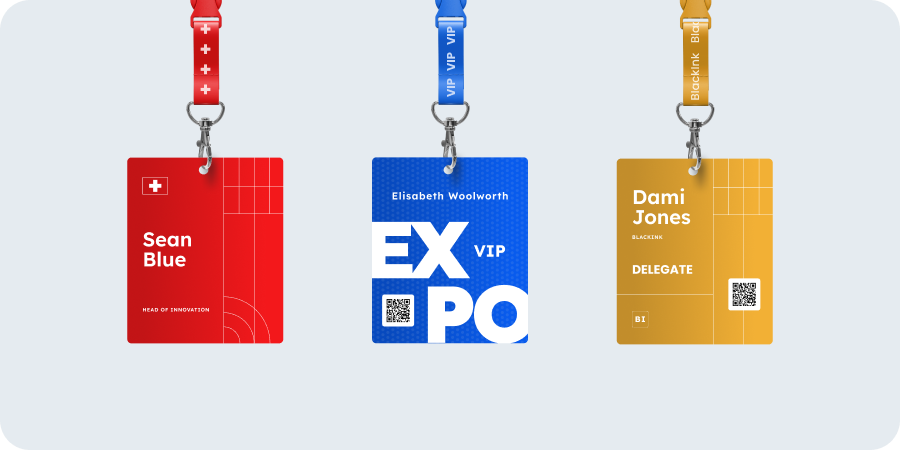
Well-made custom badges do much more than identify people. They are like miniature billboards for your brand, showcasing your logo and strengthening your organisation’s identity. They make people feel like they belong by making them wear matching credentials. They make networking easier by giving people something to talk about and eliminating the “I’ve forgotten your name” awkwardness.
They have security benefits. Different coloured badges or lanyard styles make it easy to tell who is a speaker, staff member, exhibitor, member of the press, or a general attendee. This visual difference helps security staff identify people who shouldn’t be there and ensures only authorised personnel can access restricted areas.
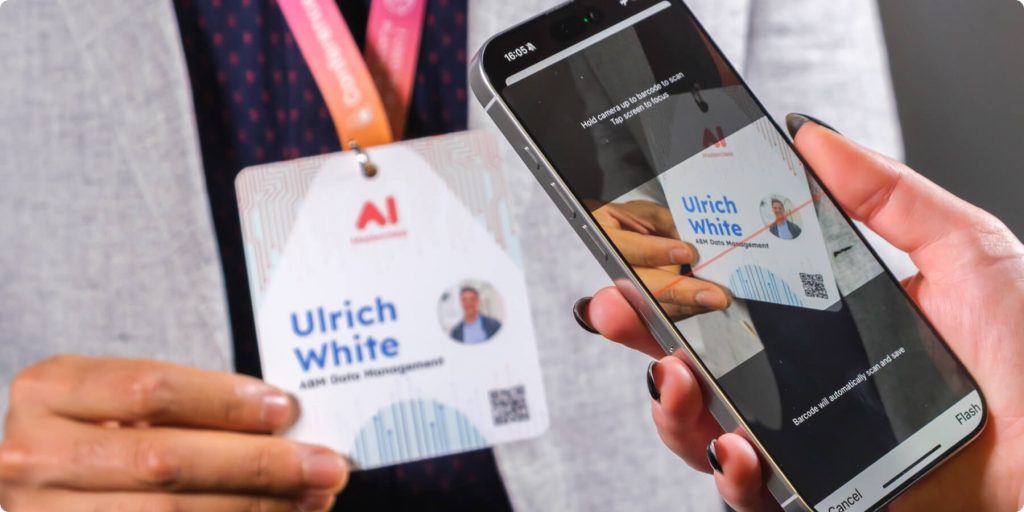
Add on some event technology, such as personalised QR codes, NFC / RFID chips, and the humble name badge can not just enhance your access control options, but it also becomes pivotal to understanding the interactions visitors have while they’re at your event.
From a business point of view, professional name badges for events show that you are competent and pay attention to detail. Poorly made badges, handwritten corrections, mismatched designs, and cheap materials can wreck the all-important first impressions visitors have of your event.
On the other hand, well-made custom badges show that you care about the little things, including how you value each attendee, in turn affecting how people see your whole organisation.
How to choose the right event name badge: 6 key factors
When people talk about badge printing, the conversation can quickly turn technical, and you start talking about the merits of different printers. We find it’s easier to start with the badge.
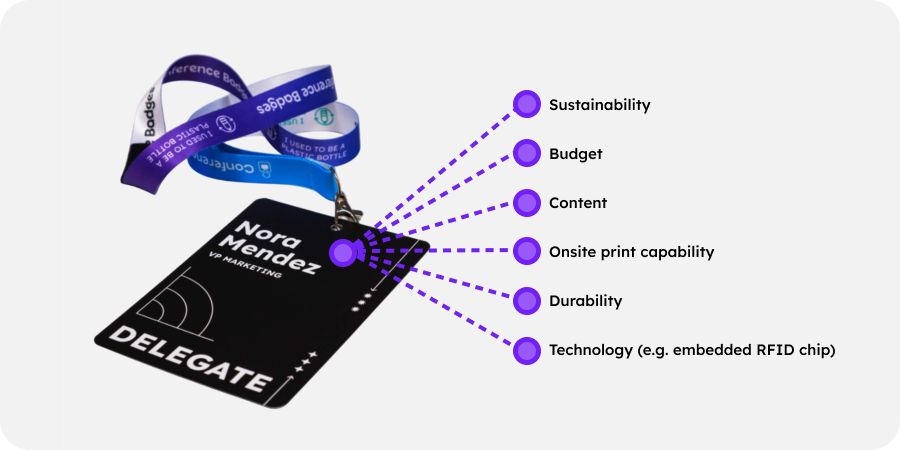
Here are six factors that will help us narrow down the badge type. Then we can look at which printers will go with that badge type.
- Sustainability
- Budget
- Content – specifically, how much needs to be printed on the badge
- Onsite print capability
- Durability
- Technology (e.g. embedded RFID chip)
Let’s go through these in more detail.
Sustainability and eco-friendly badge materials
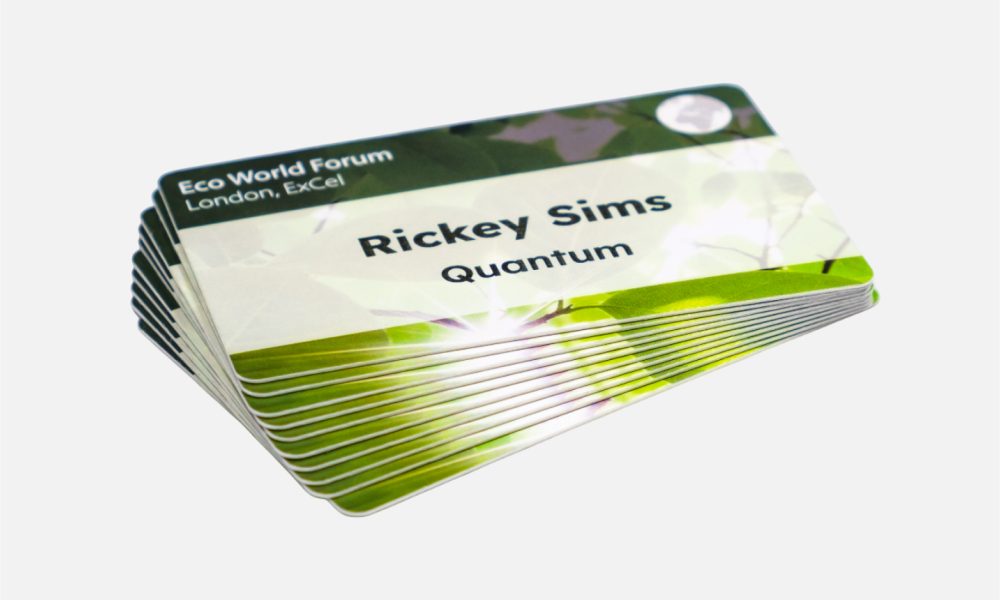
Corporate clients increasingly have environmental targets baked into their event briefs. It’s no longer a tick box – it’s a commitment, and shows the event’s values.
Choosing eco-friendly materials such as recycled, recyclable or compostable badges reduces waste and aligns with CSR goals, while still looking polished and professional.
Badges that minimise plastic or use biodegradable stocks help demonstrate that your company takes sustainability seriously, without compromising on quality or finish. However you’ll need to balance this with durability.
On the whole, truly eco materials don’t last for more than a couple of days, whereas PVC will last for years (too long, you might say!). So it’s easy to avoid plastic for a one-day, indoor event. If your badge has to take on a couple of outings to the networking bar, or face the elements outdoors, you may want to consider a recycled PVC or face up to the likelihood of having to reprint some badges onsite.
Budget considerations for event badge printing
Badge decisions need to fit the overall event budget, but it’s worth thinking in terms of value, not just unit cost. A basic printed card might be inexpensive per piece, but if it’s the first impression attendees get on arrival at your event, do you want it to feel more premium?
If you plan to integrate QR codes or RFID elements for session tracking and access control, a slightly higher-end badge can deliver efficiencies elsewhere, reducing queues at registration or staff time managing entry points.
If you run multiple events under the same event brand, you can find cost efficiencies by printing for the year upfront or even drop the ‘2025’ from the logo when it appears on the badge, so those backgrounds are good for 2026, and you can have them pre-branded in bulk.
Badge content, size and layout design
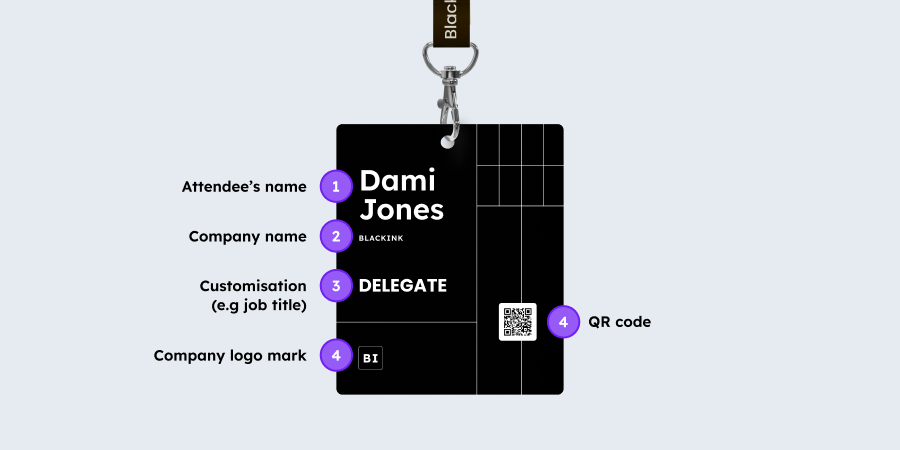
Event badges often carry more than just a name. They might include job titles, company, session tracks, QR codes and sponsor logos. More content means you need a badge format and printer capable of clear, readable output, especially if you plan to segment by role or access level, for example, distinguishing speakers from delegates.
If the badge will display lots of data or branding elements, consider materials and sizes that lend themselves to clean layouts and high-resolution printing, ensuring attendees can absorb the information at a glance.
For example, a credit-card size badge might suit an event where your design just incorporates the event brand, attendee name, company and a QR code. But once you start adding more logos, the wifi password, an attendee type bar etc. you’ll quickly be hankering for more space.
If you want a detailed event agenda on the back, you may want to ‘supersize’ yourself and go up to an A6 badge.
And one last tip here – it’s no fun straining to see the name of that person that you’ve started a conversation with but can’t remember the name of (especially when you’re trying not to get caught). So allow space for a name that’s nice and big.
Mock up your badge in Word, Canva or your favourite design drafting app. Just put in placeholder boxes for the logos. Type a long name and company as an example. Print it out. Check if you can read it easily from 6 feet away. You can? Now you know what size badge you’re looking for!
Onsite conference badge printing capability
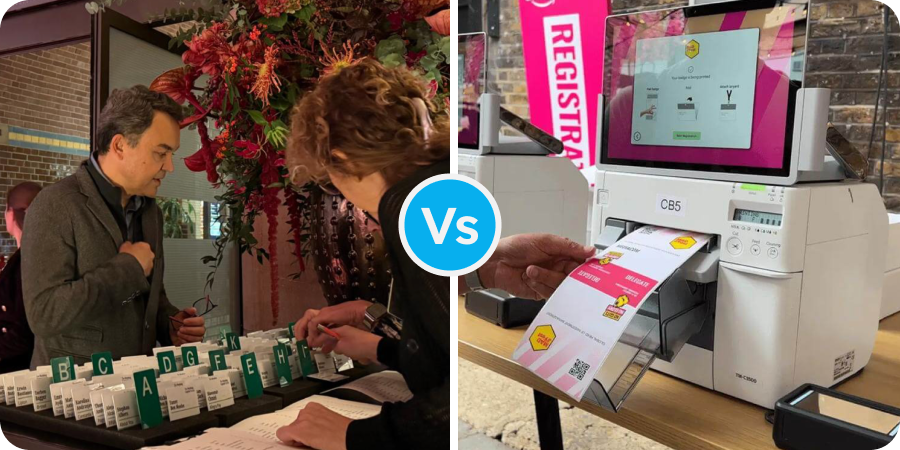
In a corporate environment, last-minute changes happen. Walk-in registrations, late speaker updates, and reprints for lost badges. Onsite printing lets you respond, keeping check-in smooth and professional.
You may even want to print all of your badges onsite. Find out more information about event badge printing here.
Onsite systems can integrate with your registration database, print badges in seconds, and handle updates on the fly.
They also reduce waste from unused pre-printed badges and give you flexibility with dynamic content such as session details or personalised schedules that might change up to the last minute.
Here you should consider whether you want to print colour onsite. If you don’t need to, it will likely reduce your costs and print time. If you do need colour printed onsite (e.g. for ID photos or colours to indicate attendee type), then your options are likely to end up being credit card size PVC badges or Butterfly Peel and Fold badges.
Badge durability for multi-day and outdoor events
For multi-day conferences, outdoor events or premium experiences, badge durability matters. Cheap thermal stock might fade or bend if worn all day, while laminated or rigid PVC badges hold up against wear and tear and convey a more polished look.
And no joke – if there’s a social element to the event that involves alcohol, you can bet your badges will take more of a battering than they would at the average event.
Durable badges avoid the embarrassment of creased or torn badges during high profile moments such as keynote presentations, networking dinners or client demos, and help keep branding on point.
Event badge technology: QR Codes, RFID and NFC
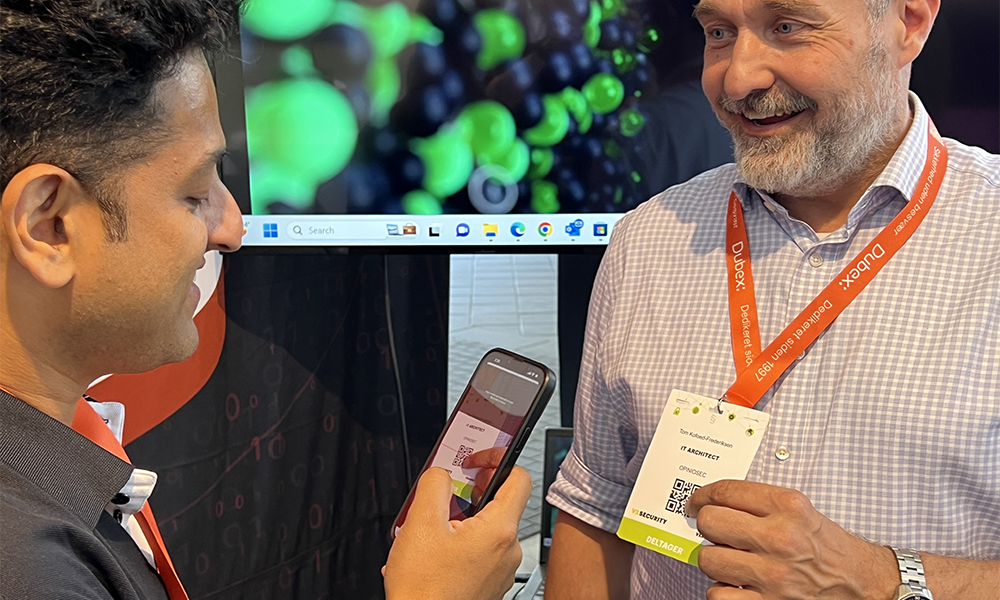
Badges are increasingly part of the event tech stack, not just a way of showing someone’s name. QR codes enable quick scanning for session entry or lead capture, while embedded RFID or NFC chips can power contactless access control, attendee flow analysis, even personalised experiences at exhibition stands or in lounges.
In corporate settings where data and analytics often shape post-event reporting, these technologies can deliver valuable insights into how many sessions were attended and where engagement peaked, all while making check-in and security run nice and smoothly.
Add in an exhibitor lead capture app and you have a quick power-up for your QR codes, giving exhibitors a better way to quickly capture leads while getting some great metrics on how your event is performing for exhibition stakeholders.
Consider carefully which technology you need on your badge. A QR code can be printed on just about anything, whereas an NFC chip limits your options a little.
Conference badge printing summary and expert advice
You have many choices open to you as to badge types and how to print them. Start by using the six factors outlined to work out what kind of badge best suits your event. Once you’ve narrowed it down, you’ll also have narrowed down the printer options available to you. Find out more about different printing techniques in our other blog post Scannable pre-printed badges vs. onsite event badge printing
The Conference Badges team is here to help. Call or contact us for advice on badge types and print methods and we’ll tailor a solution to exactly match your audience profile and event spec.