
TOP QUALITY
EXPERT SUPPORT
SCALABLE SOLUTIONS
EXPRESS SHIPPING
How to choose the right event name badge
How to guides, Tips and advice

How to choose the right event name badge

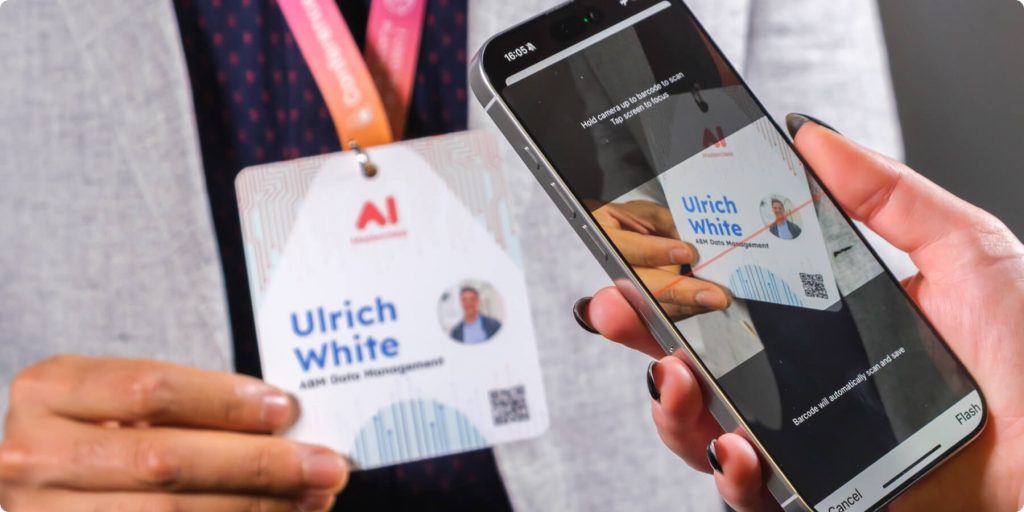
Behind the simple conference badge lies a surprisingly complex world of badge printing technologies, material choices, and design factors. Knowing how to use badges and lanyards turns them from simple needs into strategic tools, whether you’re planning a 50-person corporate workshop or an international conference with 5,000 attendees. Why conference badges and lanyards matter at events Well-made custom badges do much more than identify people. They are like miniature billboards for your brand, showcasing your logo and strengthening your organisation’s identity. They make people feel like they belong by making them wear matching credentials. They make networking easier by giving people something to talk about and eliminating the “I’ve forgotten your name” awkwardness. They have security benefits. Different coloured badges or lanyard styles make it easy to tell who is a speaker, staff member, exhibitor, member of the press, or a general attendee. This visual difference helps security staff identify people who shouldn’t be there and ensures only authorised personnel can access restricted areas. Add on some event technology, such as personalised QR codes, NFC / RFID chips, and the humble name badge can not just enhance your access control options, but it also becomes pivotal to understanding the interactions visitors have while they’re at your event. From a business point of view, professional name badges for events show that you are competent and pay attention to detail. Poorly made badges, handwritten corrections, mismatched designs, and cheap materials can wreck the all-important first impressions visitors have of your event. On the other hand, well-made custom badges show that you care about the little things, including how you value each attendee, in turn affecting how people see your whole organisation. How to choose the right event name badge: 6 key factors When people talk about badge printing, the conversation can quickly turn technical, and you start talking about the merits of different printers. We find it’s easier to start with the badge. Here are six factors that will help us narrow down the badge type. Then we can look at which printers will go with that badge type. Sustainability Budget Content – specifically, how much needs to be printed on the badge Onsite print capability Durability Technology (e.g. embedded RFID chip) Let’s go through these in more detail. Sustainability and eco-friendly badge materials Corporate clients increasingly have environmental targets baked into their event briefs. It’s no longer a tick box – it’s a commitment, and shows the event’s values. Choosing eco-friendly materials such as recycled, recyclable or compostable badges reduces waste and aligns with CSR goals, while still looking polished and professional. Badges that minimise plastic or use biodegradable stocks help demonstrate that your company takes sustainability seriously, without compromising on quality or finish. However you’ll need to balance this with durability. On the whole, truly eco materials don’t last for more than a couple of days, whereas PVC will last for years (too long, you might say!). So it’s easy to avoid plastic for a one-day, indoor event. If your badge has to take on a couple of outings to the networking bar, or face the elements outdoors, you may want to consider a recycled PVC or face up to the likelihood of having to reprint some badges onsite. Budget considerations for event badge printing Badge decisions need to fit the overall event budget, but it’s worth thinking in terms of value, not just unit cost. A basic printed card might be inexpensive per piece, but if it’s the first impression attendees get on arrival at your event, do you want it to feel more premium? If you plan to integrate QR codes or RFID elements for session tracking and access control, a slightly higher-end badge can deliver efficiencies elsewhere, reducing queues at registration or staff time managing entry points. If you run multiple events under the same event brand, you can find cost efficiencies by printing for the year upfront or even drop the ‘2025’ from the logo when it appears on the badge, so those backgrounds are good for 2026, and you can have them pre-branded in bulk. Badge content, size and layout design Event badges often carry more than just a name. They might include job titles, company, session tracks, QR codes and sponsor logos. More content means you need a badge format and printer capable of clear, readable output, especially if you plan to segment by role or access level, for example, distinguishing speakers from delegates.  If the badge will display lots of data or branding elements, consider materials and sizes that lend themselves to clean layouts and high-resolution printing, ensuring attendees can absorb the information at a glance. For example, a credit-card size badge might suit an event where your design just incorporates the event brand, attendee name, company and a QR code. But once you start adding more logos, the wifi password, an attendee type bar etc. you’ll quickly be hankering for more space. If you want a detailed event agenda on the back, you may want to ‘supersize’ yourself and go up to an A6 badge. And one last tip here – it’s no fun straining to see the name of that person that you’ve started a conversation with but can’t remember the name of (especially when you’re trying not to get caught). So allow space for a name that’s nice and big. Mock up your badge in Word, Canva or your favourite design drafting app. Just put in placeholder boxes for the logos. Type a long name and company as an example. Print it out. Check if you can read it easily from 6 feet away. You can? Now you know what size badge you’re looking for! Onsite conference badge printing capability In a corporate environment, last-minute changes happen. Walk-in registrations, late speaker updates, and reprints for lost badges. Onsite printing lets you respond, keeping check-in smooth and professional. You may even want to print all of your badges onsite. Find out more information about event badge printing here. Onsite systems

Top event planning conferences to attend
Tips and advice

Top event planning conferences to attend in 2026 in the UK

The events industry is changing quickly, and every organiser’s top priorities are sustainability, using technology, and making sure attendees have a good time. In 2026, there will be a lot of great industry events in the UK and Europe for event professionals who want to improve their skills, find new suppliers, and meet other professionals. We have put together this complete guide to help you plan the top event planning conferences to attend in 2026. It lists the conferences, exhibitions, and summits that are truly useful for event planners, venue managers, and industry suppliers. The season starts in spring 2026 International Confex 25-26 February 2026 | ExCeL London International Confex is still a major event in the UK calendar after 43 years. Confex brings together corporate event planners, agencies, associations, exhibition organisers, and suppliers all in one place. There are more than 330 exhibitors (including Conference Badges), more than 150 speakers in ten content theatres, and more than 5,500 attendees. The 2026 edition has a new format, with Day 2 being all about hands-on workshops. The Brand Experience Lab, Agency Hub, Exhibition HQ, People & Planet (for sustainability and inclusion), and London Calling (to show off the best venues in the capital) are all content theatres. Confex is a great way to find new suppliers, learn about new trends, and grow your professional network. Best for: Planners of corporate events, event agencies, exhibition organisers, and venue managers. Event Production Show 25-26 February 2026 | ExCeL London Co-hosted with Confex at ExCel, The Event Production Show has been the UK’s longest-running event for professionals who plan outdoor and live events for more than 35 years. EPS brings together the whole live events ecosystem to share ideas, solve problems, and look into new ways of doing things. This includes festivals, stadium tours, brand activations, and cultural celebrations. The 2026 edition will have more than 200 exhibitors and more than 100 speakers over two days. They will talk about crowd management, sustainability, creativity, technology, supply chains, and diversity. This free event, which is being put on with Access All Areas magazine, is a must-attend for anyone who works in live events. Best for: People who plan festivals, production companies, outdoor events, and local government event teams. Edie, 26 25-26 March 2026 | Business Design Centre, London Edie 26 is becoming more and more important for event professionals who care about sustainability, even though it’s not only about events. Edie is the UK’s only sustainable business event run by a certified B Corp. It brings together more than 1,000 leaders in sustainability and net-zero on two floors of the famous Business Design Centre. Six themed stages, eight professionally run workshops, one-on-one advisory clinics, and decision-maker roundtables all offer useful advice on how to make events more sustainable. The Innovation Pavilion shows off the newest solutions that event planners can use right away. Best for: Managers of sustainable events, venue operators with net-zero goals, and agencies that are creating sustainable event services. Top event planning conferences to attend in 2026 in the summer The Meetings Show 24-25 June 2026 | ExCeL London The Meetings Show is the UK’s top platform for the meetings and events community. It brings together more than 12,000 people and 250 exhibitors for two days of networking, learning, and connecting. Attendees get a full experience of meetings, events, and business travel because the show is held at the same time as the Business Travel Show Europe and TravelTech Show. The programme covers useful topics like sustainability, hybrid events, diversity and inclusion, and professional growth. The new 25,000 square metre ICC Expansion at ExCeL London will make the venue better for 2026. Best for: Corporate event planners, event managers for associations, and sales teams for venues. Reset Connect London 23-24 June 2026 | ExCeL London The UK’s award-winning sustainability ecosystem event brings together 7,500 people, 400 speakers, and 300 exhibitors who are all working on decarbonisation and changing the way businesses work. Reset Connect gives event planners ideas for net-zero strategies, green investments, and long-lasting solutions that they can use in their work. Peer-to-peer learning and problem-solving are encouraged at collaborative workshops and roundtables that focus on the problems of putting on sustainable events. Best for: Event sustainability leaders, venue owners who want to cut carbon emissions, and suppliers who want to make eco-friendly products. Autumn 2026: Specialist events Event Organisers Summit 12-13 October 2026 | Radisson Hotel & Conference Centre, London Heathrow The Event Organisers Summit is not like other exhibitions. Instead of a trade show floor, this event is all about prearranged one-on-one meetings between buyers and suppliers. This makes sure that the conversations are useful and not just random encounters. The program has keynote speeches, discussion panels, and certification programs that cover new trends and best practices. The summit shows that the industry is dedicated to diversity and inclusion by working with Women in Exhibitions (WIE). Best for: Senior event planners who want to meet with specific suppliers, people who want to get certified, and professionals who value structured networking. Event Tech Live 11-12 November 2026 | ExCeL London Event Tech Live is the only event in Europe that is all about event technology. It shows off the newest tools that are changing how events are planned, delivered, and measured. The 2026 edition, now in its 12th year, will have live demonstrations, hands-on activities, and product launches for AI-powered tools, immersive visual design, registration platforms, and engagement solutions. The Event Technology Awards that go along with this event honour new ideas in the field. This free event is a must-attend for anyone who is thinking about investing in event technology. It has over 2,500 attendees and 100 exhibitors. Best for: People who buy event technology, digital event managers, venues that need to upgrade their tech infrastructure, and event agencies. The Sustainable Events Show October/November 2026 (date and venue TBC) | Central London For the sixth year in a row, the UK’s first event trade show focused on sustainability

Best marketing events to go to in 2026
Tips and advice

Best marketing events to go to in 2026 in the UK

  The marketing landscape is changing how brands connect with customers, and every campaign must now consider sustainability. For marketers who want to stay ahead, 2026 has an amazing calendar of events all over the UK and Europe. We help marketing teams ensure that event registration goes smoothly at their events. This guide will assist you in planning your professional development for the upcoming year. It lists the best marketing events to go to in 2026 that will be most useful for marketers at all levels. Marketing events in spring 2026 PMW Unlocked / Performance Marketing Unlocked3–4 March 2026 | Business Design Centre, Islington, London  Performance Marketing Unlocked (often styled as PMW Unlocked) is a major two-day industry event and conference for performance and digital marketing professionals. It’s designed as an immersive gathering where leaders, practitioners, agencies, brands, and technology partners come together to explore trends, strategies, and practical insights around performance marketing and broader digital marketing topics. Best for: Marketing leaders (CMOs, Heads of Growth, Digital Marketing Managers), performance and paid activity specialists, brand builders, agencies, and tech/platform partners.   The Marketing Meetup Conference  19 March 2026 | Church House, London The Marketing Meetup (TMM) is a global marketing community of over 50,000 members, running dozens of events each year from casual meetups and webinars to big conferences. Unlike a multi-track conference, this is a single-track / single-stage event meaning everyone attends the same sessions. A variety of topics from writing and content strategy, marketing trends, creativity & storytelling, behavioural science fundamentals, to emerging tools (e.g. practical AI for marketing) are discussed.  TMM prides itself on being a friendly, welcoming, inclusive community not a slick corporate conference. Their vibe is about kindness, support, shared curiosity, and real human connection. Best for: Friendly, community-minded marketers, content creators, freelancers, consultants and anyone in those fields who values practical learning and genuine connection.   The Future of Brands 2026 29 April 2026 | 180 Studios, London, UK The Future of Brands is a major UK industry conference for brand marketers, media professionals, and advertising leaders, run by Adwanted Events – a leading organiser of media & advertising industry events. The conference explores current and future trends in branding, media, advertising, creativity, technology and measurement.  The 2026 edition has been expanded into a multi-stage experience spread over three floors. Previous speakers and attendees have included high-profile leaders from brands like Octopus Energy Group, Morrisons, NatWest Group, Volkswagen UK, Specsavers, Reckitt, Santander and more.  Best for: Brand marketers, media leaders, agency professionals, and advertising tech professionals. What are the main marketing events in the summer of 2026? Brighton SEO 30 April – 1 May 2026 | Brighton brightonSEO is described as “the world’s biggest search conference”, a major annual gathering for the search marketing/SEO/digital marketing community. For those wanting more than just talks, there’s an optional training day (workshop) the day before giving a chance to dive deep into specific topics.  A big part of the event’s draw is meeting and connecting with other SEO & digital marketing professionals. According to attendees of past events, beyond the formal sessions there’s a strong informal, community-driven energy, with plenty of opportunity to mingle, exchange ideas, and get inspired. Best for: SEO professionals, digital marketers, content strategists, freelancers, and agencies. People wanting to learn up-to-date SEO and search marketing tactics, whether advanced or entry-level.    DMWF Expo 6–7 May 2026 | ExCeL London, United Kingdom The Digital Marketing World Forum (DMWF) Global is a major conference and expo for senior marketing leaders and marketing technology professionals. It focuses on the latest trends, strategies, tools, and innovations shaping the future of digital marketing and martech. It is designed as a two-day immersive event with high-level content and networking opportunities. The event showcases 150+ speakers from leading brands and organisations. Best for: Senior marketers aiming to stay ahead in digital strategy and technology innovation, offering actionable insights and exposure to cutting-edge trends in the industry.   Gartner Marketing Xpo11 – 12 May 2026 | Park Plaza Westminster Bridge, London The main European marketing event from Gartner is back with the theme “Build What’s Next: Marketing Leadership in an AI-Driven World.” This conference is only for CMOs and other high-level marketing leaders who want research-based information instead of sales pitches.  The two-day programme includes digital and product marketing, customer experience strategy, and optimising marketing across multiple channels. Expect keynotes led by analysts, one-on-one advisory sessions, and structured networking with other marketing executives. Park Plaza Westminster’s small size makes it easier for people to connect in ways that larger events can’t. Best for: CMOs, VPs of Marketing, and Marketing Directors who want to set a strategic direction.   SocialDay19 – 20 May 2026 | Protein Studios, London SocialDay is different from other marketing conferences because it focuses only on social media marketing for two days. The festival format includes social commerce, AI tools for social, the creator economy, paid advertising, influencer partnerships, and organic strategy. You can make a custom agenda that focuses on your specific problems because sessions are offered in several streams.  Protein Studios in Shoreditch has a creative space that fits with the fast-paced, new ideas that come up on social media. Best for: People who manage social media, plan content, or work in influencer marketing. ATOMICON June 16th 2026  | Newcastle upon Tyne ATOMICON is billed as “the world’s EPIC-EST sales and marketing conference”, one of Europe’s largest gatherings aimed at small business owners, entrepreneurs and marketers. The vibe is described as fun, welcoming, and high-energy combining serious business content with a more relaxed, community focused and creative atmosphere.  The event isn’t just about passive listening. You’ll have opportunities to connect with other small business owners, potential collaborators or clients. The organisers even run a “matchmaker” service to help you meet like-minded people. There are pre-event and after party networking sessions, giving time and space to socialise, mingle, and forge relationships even if you come alone.  Best for: Small business owners, Entrepreneurs & startup founders, Coaches,

Pre-printed badges vs. onsite event badge printing
Event tech, How to guides, Tips and advice

Pre-printed badges vs. onsite event badge printing

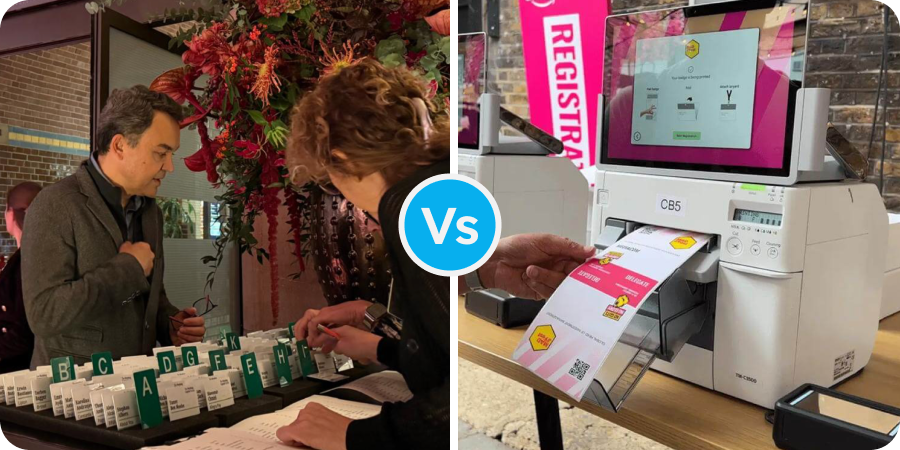
When you go to a conference, the first interaction you often have is collecting your name badge. It’s a small thing that has a big impact on everything from first impressions to how well you network. But there is a key decision behind that simple badge: should you print your conference badges ahead of time or use onsite badge-printing equipment? Event planners make big budget savings and reduce queues by simply picking the appropriate badge-printing method for their event. Pre-printed badges vs. onsite event badge printing? There isn’t one way to print badges that works for everyone. The method you choose will impact your workflow, budget, and the quality of your custom badges. It will change the arrival experience and so reflect on the event, overall experience and your brand. You can get pre-printed conference badges made before your event using professional printing services or your own equipment. Designs are finalised, attendee data is combined, and event name badges are made, often weeks in advance.  These badges come ready to hand out, sometimes with lanyards and badges already put together. For small events where you know the majority of who will be attending well in advance, this is often the best model. Onsite badge printing is a very different approach. You don’t have to personalise any badges ahead of time; instead, badge-printing equipment at your event prints name badges as delegates arrive, on demand. A name badge printer prints attendees’ credentials in real time as they check in, pulling information directly from your registration system. Understanding how badge printer technology and materials work makes it possible to choose between these two options.   Badge printer technologies Several printing technologies are competing for your attention when it comes to event badge printers.  Printers that work directly with heat ‘Direct thermal’ printers are a common type of onsite badge printer. They use badge materials that go from white to black when they come into contact with the printer’s thermal printhead. Just heat and paper that has been treated in a special way to react to the heat. No ink, ribbon, or cartridges. These name badge printers are great at printing black on white quickly. They are generally small and fit easily on registration desks, and because they don’t need any supplies other than the badge stock, they’re reliable, and operational costs are easy to predict. What are the limitations of thermal printing? Direct thermal printing produces only black-on-white output. The badge material must already have any logos, branding, or colour-coding on it. The printer can only add names, companies, and job titles for each attendee.  Badges also fade over time when exposed to heat or sunlight, which is fine for events that last only one day but not so great for conferences that last several days and where people keep their badges as souvenirs. Thermal transfer printers ‘Thermal transfer’ badge printing machines use ribbons (like a thin plastic film) to transfer ink onto badge materials, giving them more options. This method works with regular paper, synthetic materials, and even some kinds of plastic. What is the main benefit over ‘direct thermal’? You can use regular paper stock, which is much cheaper than heat-sensitive materials. Thermal transfer also makes prints that last longer and won’t fade.  Thermal transfer printers print black text with sharp quality but are less suited to images unless they are simply black and white images. Even grayscale images are a struggle for these printers. Having a print ribbon also means you have another consumable to change and keep stocked up on. Inkjet badge printers Inkjet badge printers can give a little more flexibility to your onsite badge printing. Depending on the model of printer, you can print on stock such as ‘Butterfly Peel & Fold Badges’ and may be able to print in full colour onsite, producing bright, full-colour name badges that can be personalised with photos, logos, and detailed graphics. Inkjet badge printers often produce results comparable with pre-printed ones. You can print everything, including artwork onsite so last-minute design changes won’t ruin your event.  What are the trade-offs? Inkjet printers can be more expensive to run than thermal printers, mainly due to ink costs, and for the really fast ones that are best suited to onsite use, it can be more expensive to hire inkjet badge printers. Printing speeds are typically slower: 6 to 10 seconds per badge, compared to 1 to 2 seconds for thermal options. Printers that print directly on cards (PVC) Direct-to-card badge printing makes plastic badges that look like credit cards or ID cards for high-end conferences. These printers for conference badges use dye-sublimation technology to print pictures directly onto PVC card stock. PVC badge printers make prints that look great and last a long time. These custom badges can withstand events lasting a lot longer than one day without showing wear. They can also include access-control encoding and give off a high-end, professional look. What are the problems with dye-sub? These name badge printers cost a lot of money, usually between £1,000 and £4,000. PVC card stock costs a lot more per unit than paper badges, and it takes longer to print, usually 30 to 45 seconds per card. You need users who are trained on these printers to set up and run them properly. For most conferences, direct-to-card printing only makes sense if the extra cost is worth it for security, durability, or prestige. The conventional way: Pre-printed conference badges For good reasons beyond tradition, pre-printed badges are still the most common type at many events. The benefits of pre-printing When you don’t have to worry about the limitations of onsite equipment, you can design a lot more. Professional print shops can make name badges for events using methods that no portable badge printing machine can match. These include printing on thicker card stock with metallic inks, speciality papers, textured finishes, die-cut shapes, lamination, and spot UV coatings. These custom badges make a statement that basic thermal printing can’t match

name badge design
How to guides, Tips and advice

Creating impactful events: Core principles for name badge design

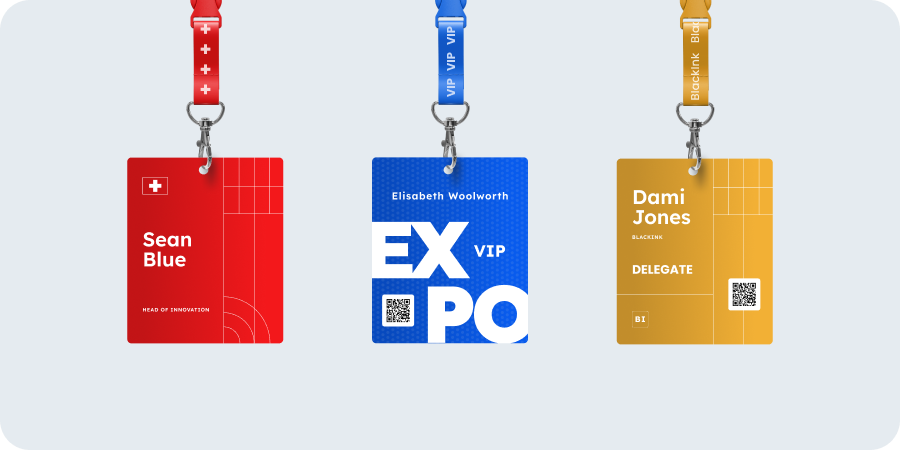
Event badges are powerful networking tools that improve the whole attendee experience and help to establish connections, not only identification tools. A well-designed badge can have a big influence on participants’ interactions and involvement all through your event. To help your next conference, seminar, or business meeting stand out, let’s investigate the key components of successful name badge design.   Why event badge design matters One should first grasp why badges matter before delving into particular design aspects. Name badges have several important purposes when attendees enter an event venue: they identify participants, provide vital information, create a feeling of belonging, and, by simplifying introductions, help to break down social barriers. A well-crafted badge recognises and uses these psychological elements to establish a more harmonious event setting. Essential elements Every successful name badge should contain some basic information, carefully balanced to give clarity without overpowering the design: The most obvious element should be the attendee’s name: It should be preferably readable from six to ten feet away. Clearly highlight first names (24–30pt font size) for simplicity of reading. Though smaller, last names are still quite legible. Organisational information: Including the company name and job title links attendees and helps to set the scene for discussions. Indicators of roles: Differentiating speakers, staff, sponsors, and general attendees—by colour coding, icons, or text—helps participants negotiate social interactions suitably. Event branding refers to: Including your logo, colours and typography. Remember that while branding is important, the name badge should primarily be functional and assist attendees in making connections.    Typography considerations Your badge’s readability is quite important, thus typography is among the most important design choices: Selection of fonts: For best legibility at a distance, choose simple sans-serif fonts, including Arial, Helvetica, or Futura. Steer clear of ornamental or script fonts that might look great but compromise readability. Scale hierarchy: Usually first names should be prominent (24–30 pt); last names can be smaller in size (18–22 pt). Other material should be scaled in line with its significance, never so small that reading calls for squinting. Not everyone has 20-20 vision, so ensure the badge design allows all attendees to benefit from the information on them. Case considerations: While keeping readability, using mixed cases for first names and ALL CAPS for last names makes a visual difference. For instance, “Sarah Johnson” is more scannable than “Sarah JOHNSON.” Opposing contrast: Make sure text and background contrast is strong; black text on white or light backgrounds is still the most readable mix, especially in the typical varying lighting at events. It is also reproducible for all onsite printers, whereas a coloured or inverted colour scheme may not be.     Visual design elements Colour psychology: used strategically, it can improve the efficacy of your name badge design. Colours can classify attendees, highlight key information, or support brand identity by triggering emotional reactions. White space: Fight the want to cover every part of the badge. Enough white space makes the design professional and increases readability. Technology integration and QR codes: Think about adding QR codes connecting to digital profiles, conference plans, or networking sites. These should be large enough to be easily readable by the device that will scan them (mobile phone or a badge scanner). However, make sure these components don’t take center stage in the design or obscure the name’s visibility. For this reason, you may want to consider larger badge sizes that give you layout options. Badge width and orientation: Usually, standard badge sizes run from 3″×4″ to 4″×6″. Although vertical badges look great for particular events, mostly when worn on lanyards, horizontal designs usually provide more design flexibility and are the most popular choice when using other types of attachment. Material and production considerations The physical characteristics of your badges greatly affect impression as well as utility: The durability: Choose products suitable for the length of your event. Standard cardstock should allow single-day events to be acceptable. Simultaneously, multi-day conferences gain from more robust choices, including synthetic papers, laminated cards or PVC.  Attachment methods: Consider the badge’s use and wearability. For longer events, lanyards provide visibility and comfort; for shorter meetings, clips or pins could be more fitting. For crew who are working onsite, the attachment may not be suited to the task they’re performing, so you may want to give them options. A professional look is created by magnetic attachments which are especially kind to clothing.  Sustainable badges: Event planners are now giving environmental impact more thought. Among the options are biodegradable badge holders, recyclable materials, or collection sites for reusing elements following the event. Printability: High-quality printing guarantees that every element, including logos and images, looks professional and clear, so reflecting the general quality of your event.   Special considerations for different event types Different events call for different name badge designs: Corporate conferences: Professional appearance is critical, with obvious organisational ties.  Industry trade shows: Badges might have to include product interest categories or buyer/seller indicators to enable suitable business contacts. Also, consider whether there are any ‘icebreaker’ opportunities on the name badge, given the data you have about your attendees. Academic conferences: These include institutional affiliations or research areas meant to support pertinent intellectual debates. Community or networking events: These can have more laid-back designs with conversational starters or personal interests meant to help relationships. International events: You can print a national flag indicating the country your delegate hails from, which can help conversations to flow by removing the obstacle of not knowing which country other attendees are from. Testing your design Before finalising your name badge design: Create actual prototypes and test readability from several distances. See how the badge appears when worn (often lanyards cause badges to flip or tilt). Get comments from a small group comprising several points of view on stakeholders. Test under lighting like that of your venue. Conclusion Event badges represent a critical touchpoint in your attendee experience. Thoughtfully crafted, they do much more than name attendees; they strengthen your brand, help to create

Scroll to Top