TOP QUALITY
EXPERT SUPPORT
SCALABLE SOLUTIONS
EXPRESS SHIPPING
Pre-printed badges vs. onsite event badge printing
Event tech, How to guides, Tips and advice

Pre-printed badges vs. onsite event badge printing

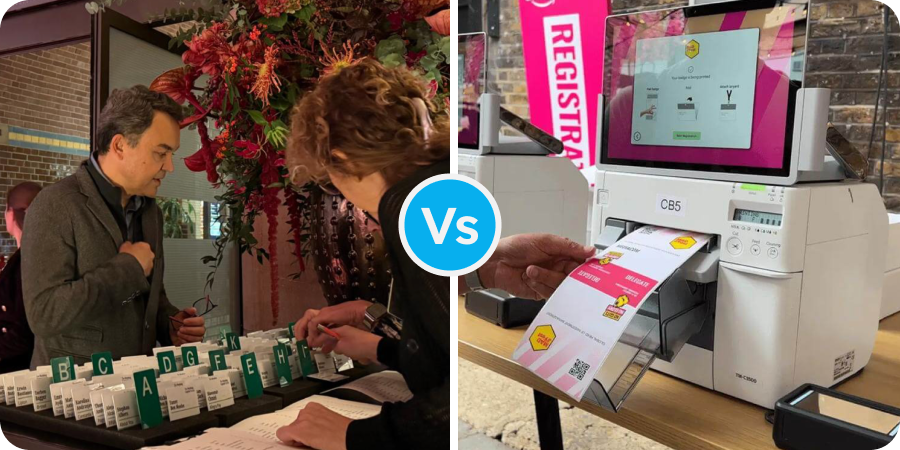
When you go to a conference, the first interaction you often have is collecting your name badge. It’s a small thing that has a big impact on everything from first impressions to how well you network. But there is a key decision behind that simple badge: should you print your conference badges ahead of time or use onsite badge-printing equipment? Event planners make big budget savings and reduce queues by simply picking the appropriate badge-printing method for their event. Pre-printed badges vs. onsite event badge printing? There isn’t one way to print badges that works for everyone. The method you choose will impact your workflow, budget, and the quality of your custom badges. It will change the arrival experience and so reflect on the event, overall experience and your brand. You can get pre-printed conference badges made before your event using professional printing services or your own equipment. Designs are finalised, attendee data is combined, and event name badges are made, often weeks in advance. These badges come ready to hand out, sometimes with lanyards and badges already put together. For small events where you know the majority of who will be attending well in advance, this is often the best model. Onsite badge printing is a very different approach. You don’t have to personalise any badges ahead of time; instead, badge-printing equipment at your event prints name badges as delegates arrive, on demand. A name badge printer prints attendees’ credentials in real time as they check in, pulling information directly from your registration system. Understanding how badge printer technology and materials work makes it possible to choose between these two options. Badge printer technologies Several printing technologies are competing for your attention when it comes to event badge printers. Printers that work directly with heat ‘Direct thermal’ printers are a common type of onsite badge printer. They use badge materials that go from white to black when they come into contact with the printer’s thermal printhead. Just heat and paper that has been treated in a special way to react to the heat. No ink, ribbon, or cartridges. These name badge printers are great at printing black on white quickly. They are generally small and fit easily on registration desks, and because they don’t need any supplies other than the badge stock, they’re reliable, and operational costs are easy to predict. What are the limitations of thermal printing? Direct thermal printing produces only black-on-white output. The badge material must already have any logos, branding, or colour-coding on it. The printer can only add names, companies, and job titles for each attendee. Badges also fade over time when exposed to heat or sunlight, which is fine for events that last only one day but not so great for conferences that last several days and where people keep their badges as souvenirs. Thermal transfer printers ‘Thermal transfer’ badge printing machines use ribbons (like a thin plastic film) to transfer ink onto badge materials, giving them more options. This method works with regular paper, synthetic materials, and even some kinds of plastic. What is the main benefit over ‘direct thermal’? You can use regular paper stock, which is much cheaper than heat-sensitive materials. Thermal transfer also makes prints that last longer and won’t fade. Thermal transfer printers print black text with sharp quality but are less suited to images unless they are simply black and white images. Even grayscale images are a struggle for these printers. Having a print ribbon also means you have another consumable to change and keep stocked up on. Inkjet badge printers Inkjet badge printers can give a little more flexibility to your onsite badge printing. Depending on the model of printer, you can print on stock such as ‘Butterfly Peel & Fold Badges’ and may be able to print in full colour onsite, producing bright, full-colour name badges that can be personalised with photos, logos, and detailed graphics. Inkjet badge printers often produce results comparable with pre-printed ones. You can print everything, including artwork onsite so last-minute design changes won’t ruin your event. What are the trade-offs? Inkjet printers can be more expensive to run than thermal printers, mainly due to ink costs, and for the really fast ones that are best suited to onsite use, it can be more expensive to hire inkjet badge printers. Printing speeds are typically slower: 6 to 10 seconds per badge, compared to 1 to 2 seconds for thermal options. Printers that print directly on cards (PVC) Direct-to-card badge printing makes plastic badges that look like credit cards or ID cards for high-end conferences. These printers for conference badges use dye-sublimation technology to print pictures directly onto PVC card stock. PVC badge printers make prints that look great and last a long time. These custom badges can withstand events lasting a lot longer than one day without showing wear. They can also include access-control encoding and give off a high-end, professional look. What are the problems with dye-sub? These name badge printers cost a lot of money, usually between £1,000 and £4,000. PVC card stock costs a lot more per unit than paper badges, and it takes longer to print, usually 30 to 45 seconds per card. You need users who are trained on these printers to set up and run them properly. For most conferences, direct-to-card printing only makes sense if the extra cost is worth it for security, durability, or prestige. The conventional way: Pre-printed conference badges For good reasons beyond tradition, pre-printed badges are still the most common type at many events. The benefits of pre-printing When you don’t have to worry about the limitations of onsite equipment, you can design a lot more. Professional print shops can make name badges for events using methods that no portable badge printing machine can match. These include printing on thicker card stock with metallic inks, speciality papers, textured finishes, die-cut shapes, lamination, and spot UV coatings. These custom badges make a statement that basic thermal printing can’t match for

name badge design
How to guides, Tips and advice

Creating impactful events: Core principles for name badge design

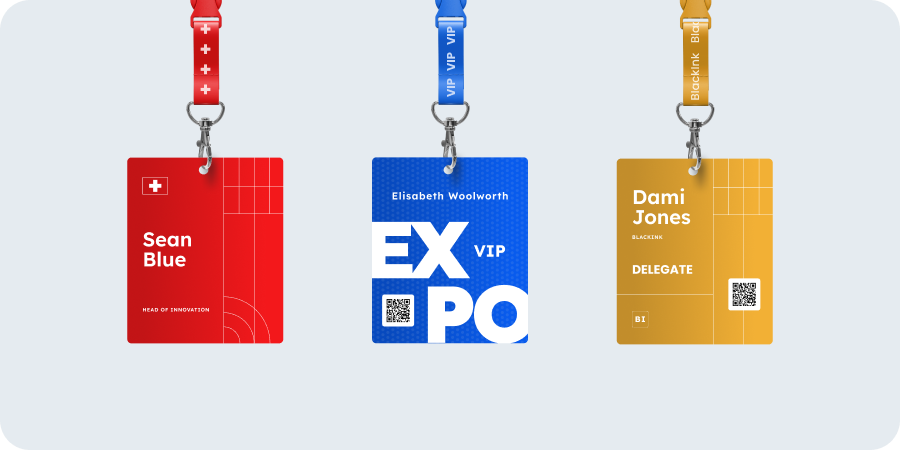
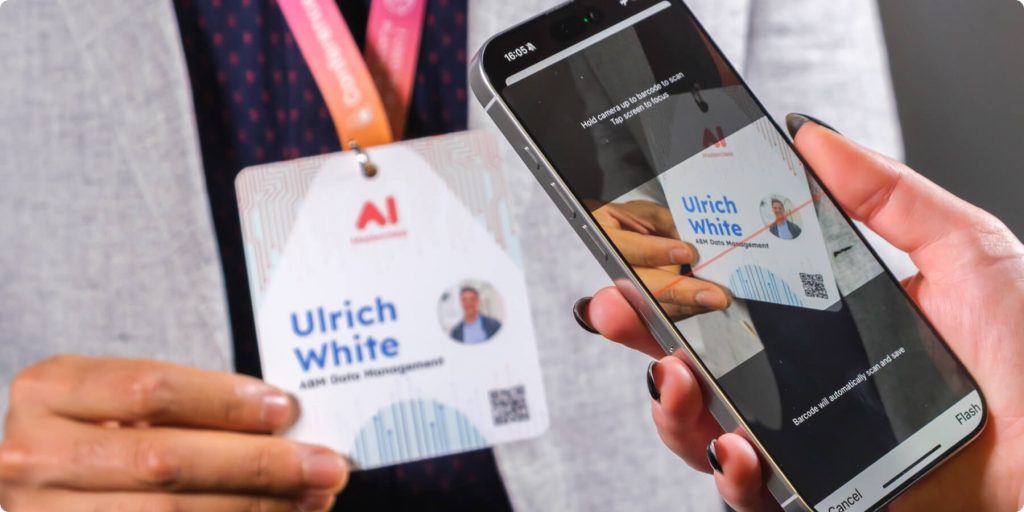
Event badges are powerful networking tools that improve the whole attendee experience and help to establish connections, not only identification tools. A well-designed badge can have a big influence on participants’ interactions and involvement all through your event. To help your next conference, seminar, or business meeting stand out, let’s investigate the key components of successful name badge design.   Why event badge design matters One should first grasp why badges matter before delving into particular design aspects. Name badges have several important purposes when attendees enter an event venue: they identify participants, provide vital information, create a feeling of belonging, and, by simplifying introductions, help to break down social barriers. A well-crafted badge recognises and uses these psychological elements to establish a more harmonious event setting. Essential elements Every successful name badge should contain some basic information, carefully balanced to give clarity without overpowering the design: The most obvious element should be the attendee’s name: It should be preferably readable from six to ten feet away. Clearly highlight first names (24–30pt font size) for simplicity of reading. Though smaller, last names are still quite legible. Organisational information: Including the company name and job title links attendees and helps to set the scene for discussions. Indicators of roles: Differentiating speakers, staff, sponsors, and general attendees—by colour coding, icons, or text—helps participants negotiate social interactions suitably. Event branding refers to: Including your logo, colours and typography. Remember that while branding is important, the name badge should primarily be functional and assist attendees in making connections.    Typography considerations Your badge’s readability is quite important, thus typography is among the most important design choices: Selection of fonts: For best legibility at a distance, choose simple sans-serif fonts, including Arial, Helvetica, or Futura. Steer clear of ornamental or script fonts that might look great but compromise readability. Scale hierarchy: Usually first names should be prominent (24–30 pt); last names can be smaller in size (18–22 pt). Other material should be scaled in line with its significance, never so small that reading calls for squinting. Not everyone has 20-20 vision, so ensure the badge design allows all attendees to benefit from the information on them. Case considerations: While keeping readability, using mixed cases for first names and ALL CAPS for last names makes a visual difference. For instance, “Sarah Johnson” is more scannable than “Sarah JOHNSON.” Opposing contrast: Make sure text and background contrast is strong; black text on white or light backgrounds is still the most readable mix, especially in the typical varying lighting at events. It is also reproducible for all onsite printers, whereas a coloured or inverted colour scheme may not be.     Visual design elements Colour psychology: used strategically, it can improve the efficacy of your name badge design. Colours can classify attendees, highlight key information, or support brand identity by triggering emotional reactions. White space: Fight the want to cover every part of the badge. Enough white space makes the design professional and increases readability. Technology integration and QR codes: Think about adding QR codes connecting to digital profiles, conference plans, or networking sites. These should be large enough to be easily readable by the device that will scan them (mobile phone or a badge scanner). However, make sure these components don’t take center stage in the design or obscure the name’s visibility. For this reason, you may want to consider larger badge sizes that give you layout options. Badge width and orientation: Usually, standard badge sizes run from 3″×4″ to 4″×6″. Although vertical badges look great for particular events, mostly when worn on lanyards, horizontal designs usually provide more design flexibility and are the most popular choice when using other types of attachment. Material and production considerations The physical characteristics of your badges greatly affect impression as well as utility: The durability: Choose products suitable for the length of your event. Standard cardstock should allow single-day events to be acceptable. Simultaneously, multi-day conferences gain from more robust choices, including synthetic papers, laminated cards or PVC.  Attachment methods: Consider the badge’s use and wearability. For longer events, lanyards provide visibility and comfort; for shorter meetings, clips or pins could be more fitting. For crew who are working onsite, the attachment may not be suited to the task they’re performing, so you may want to give them options. A professional look is created by magnetic attachments which are especially kind to clothing.  Sustainable badges: Event planners are now giving environmental impact more thought. Among the options are biodegradable badge holders, recyclable materials, or collection sites for reusing elements following the event. Printability: High-quality printing guarantees that every element, including logos and images, looks professional and clear, so reflecting the general quality of your event.   Special considerations for different event types Different events call for different name badge designs: Corporate conferences: Professional appearance is critical, with obvious organisational ties.  Industry trade shows: Badges might have to include product interest categories or buyer/seller indicators to enable suitable business contacts. Also, consider whether there are any ‘icebreaker’ opportunities on the name badge, given the data you have about your attendees. Academic conferences: These include institutional affiliations or research areas meant to support pertinent intellectual debates. Community or networking events: These can have more laid-back designs with conversational starters or personal interests meant to help relationships. International events: You can print a national flag indicating the country your delegate hails from, which can help conversations to flow by removing the obstacle of not knowing which country other attendees are from. Testing your design Before finalising your name badge design: Create actual prototypes and test readability from several distances. See how the badge appears when worn (often lanyards cause badges to flip or tilt). Get comments from a small group comprising several points of view on stakeholders. Test under lighting like that of your venue. Conclusion Event badges represent a critical touchpoint in your attendee experience. Thoughtfully crafted, they do much more than name attendees; they strengthen your brand, help to create

Scroll to Top