

Pre-printed badges vs. onsite event badge printing
- Nick Thompson
- Reading time: 15mins
When you go to a conference, the first interaction you often have is collecting your name badge.
It’s a small thing that has a big impact on everything from first impressions to how well you network. But there is a key decision behind that simple badge: should you print your conference badges ahead of time or use onsite badge-printing equipment?
Event planners make big budget savings and reduce queues by simply picking the appropriate badge-printing method for their event.
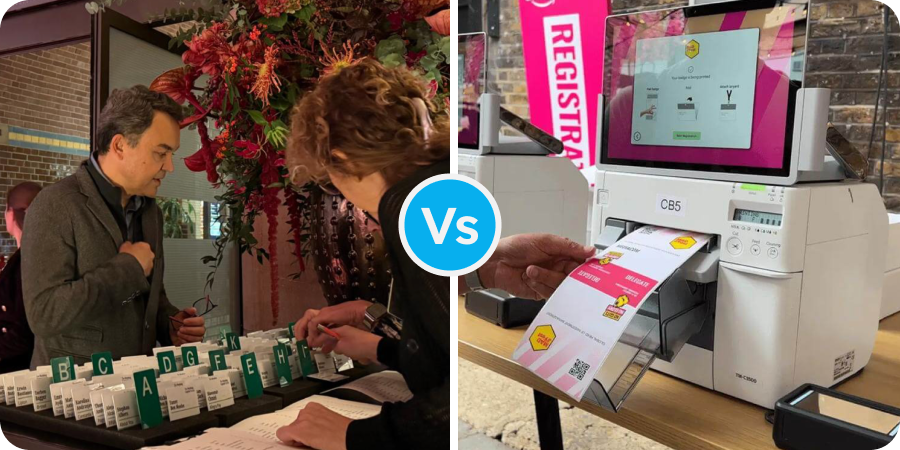
Pre-printed badges vs. onsite event badge printing?
There isn’t one way to print badges that works for everyone. The method you choose will impact your workflow, budget, and the quality of your custom badges. It will change the arrival experience and so reflect on the event, overall experience and your brand.
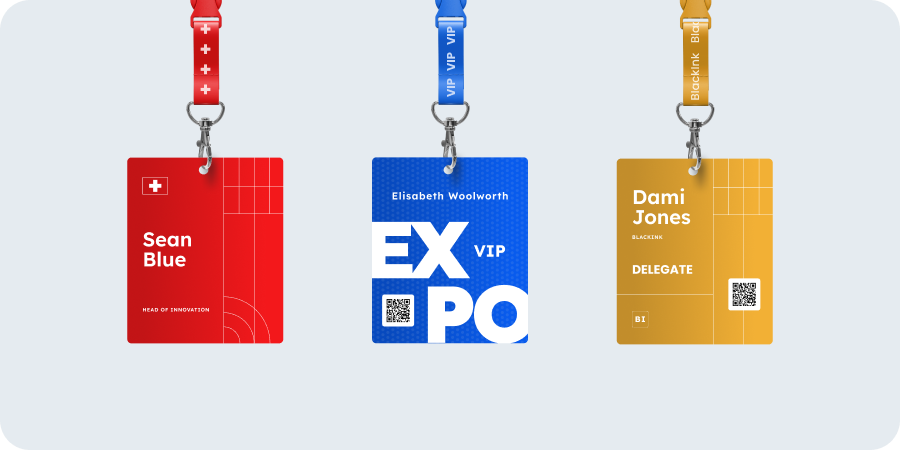
You can get pre-printed conference badges made before your event using professional printing services or your own equipment. Designs are finalised, attendee data is combined, and event name badges are made, often weeks in advance.
These badges come ready to hand out, sometimes with lanyards and badges already put together. For small events where you know the majority of who will be attending well in advance, this is often the best model.
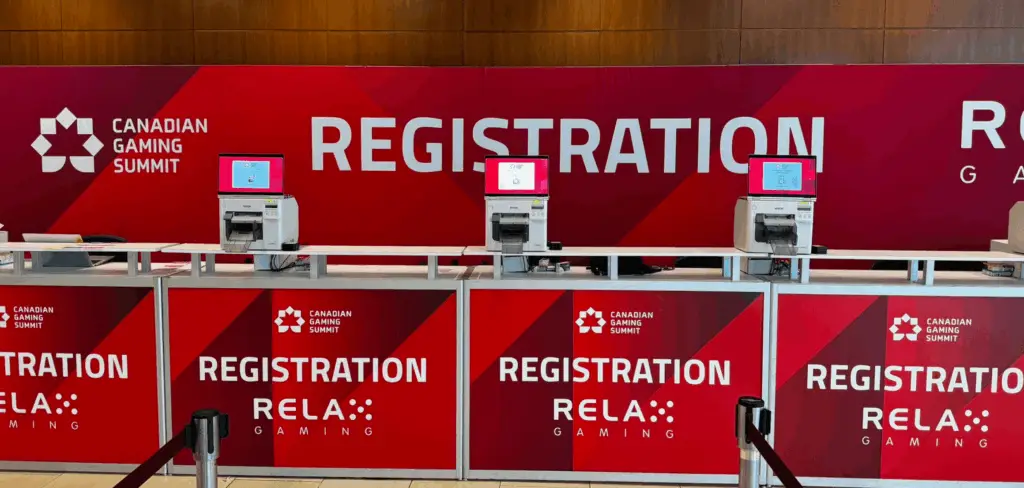
Onsite badge printing is a very different approach. You don’t have to personalise any badges ahead of time; instead, badge-printing equipment at your event prints name badges as delegates arrive, on demand. A name badge printer prints attendees’ credentials in real time as they check in, pulling information directly from your registration system.
Understanding how badge printer technology and materials work makes it possible to choose between these two options.
Badge printer technologies
Several printing technologies are competing for your attention when it comes to event badge printers.
Printers that work directly with heat
‘Direct thermal’ printers are a common type of onsite badge printer. They use badge materials that go from white to black when they come into contact with the printer’s thermal printhead. Just heat and paper that has been treated in a special way to react to the heat. No ink, ribbon, or cartridges.
These name badge printers are great at printing black on white quickly. They are generally small and fit easily on registration desks, and because they don’t need any supplies other than the badge stock, they’re reliable, and operational costs are easy to predict.
What are the limitations of thermal printing? Direct thermal printing produces only black-on-white output. The badge material must already have any logos, branding, or colour-coding on it. The printer can only add names, companies, and job titles for each attendee.
Badges also fade over time when exposed to heat or sunlight, which is fine for events that last only one day but not so great for conferences that last several days and where people keep their badges as souvenirs.
Thermal transfer printers
‘Thermal transfer’ badge printing machines use ribbons (like a thin plastic film) to transfer ink onto badge materials, giving them more options. This method works with regular paper, synthetic materials, and even some kinds of plastic.
What is the main benefit over ‘direct thermal’? You can use regular paper stock, which is much cheaper than heat-sensitive materials. Thermal transfer also makes prints that last longer and won’t fade.
Thermal transfer printers print black text with sharp quality but are less suited to images unless they are simply black and white images. Even grayscale images are a struggle for these printers.
Having a print ribbon also means you have another consumable to change and keep stocked up on.
Inkjet badge printers
Inkjet badge printers can give a little more flexibility to your onsite badge printing. Depending on the model of printer, you can print on stock such as ‘Butterfly Peel & Fold Badges’ and may be able to print in full colour onsite, producing bright, full-colour name badges that can be personalised with photos, logos, and detailed graphics.
Inkjet badge printers often produce results comparable with pre-printed ones. You can print everything, including artwork onsite so last-minute design changes won’t ruin your event.
What are the trade-offs? Inkjet printers can be more expensive to run than thermal printers, mainly due to ink costs, and for the really fast ones that are best suited to onsite use, it can be more expensive to hire inkjet badge printers. Printing speeds are typically slower: 6 to 10 seconds per badge, compared to 1 to 2 seconds for thermal options.
Printers that print directly on cards (PVC)
Direct-to-card badge printing makes plastic badges that look like credit cards or ID cards for high-end conferences. These printers for conference badges use dye-sublimation technology to print pictures directly onto PVC card stock.
PVC badge printers make prints that look great and last a long time. These custom badges can withstand events lasting a lot longer than one day without showing wear. They can also include access-control encoding and give off a high-end, professional look.
What are the problems with dye-sub? These name badge printers cost a lot of money, usually between £1,000 and £4,000. PVC card stock costs a lot more per unit than paper badges, and it takes longer to print, usually 30 to 45 seconds per card. You need users who are trained on these printers to set up and run them properly.
For most conferences, direct-to-card printing only makes sense if the extra cost is worth it for security, durability, or prestige.
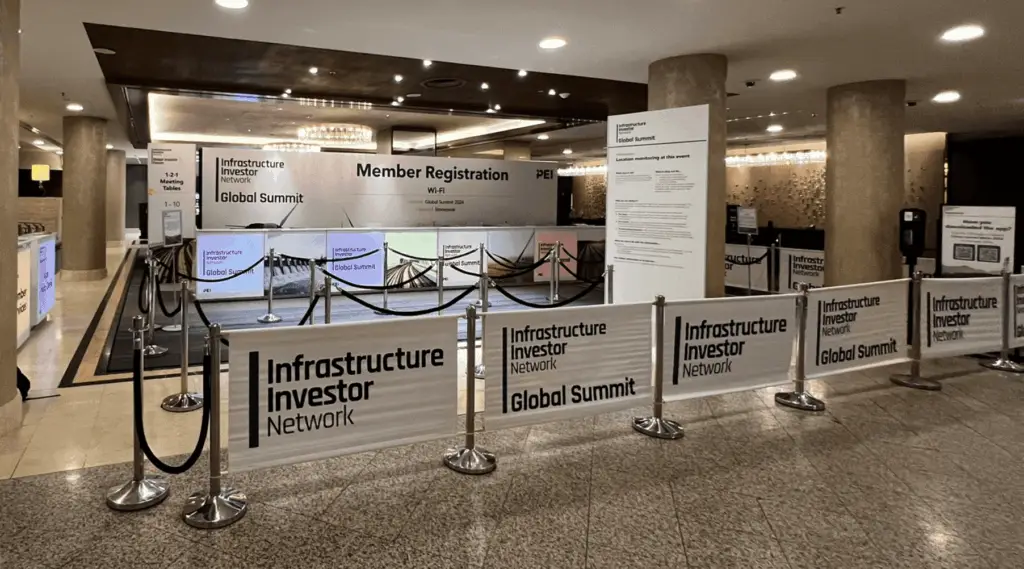
The conventional way: Pre-printed conference badges
For good reasons beyond tradition, pre-printed badges are still the most common type at many events.
The benefits of pre-printing
When you don’t have to worry about the limitations of onsite equipment, you can design a lot more. Professional print shops can make name badges for events using methods that no portable badge printing machine can match. These include printing on thicker card stock with metallic inks, speciality papers, textured finishes, die-cut shapes, lamination, and spot UV coatings.
These custom badges make a statement that basic thermal printing can’t match for companies where brand presentation is very important, like luxury brands, high-stakes networking events, and premium corporate events.
Pre-printed solutions also reduce the need for technology on the day of the event. There’s no anxiety about whether printers, software, or connections will all work. The badges are just there, ready to be given out. This simplicity is very appealing for smaller events with closely managed, confirmed guest lists.
Sometimes, pre-printing is also better for the budget. If you’re putting on a small workshop with 50 people and don’t have your own badge printing equipment, it might be cheaper to buy pre-printed name badges than to rent a badge printing system.
The real costs of pre-printing
When reality meets planning, the problem with pre-printed conference badges comes up. Things that happen at events don’t always go as planned.
Some people who sign up don’t show up. Some people change their names because they get married, change jobs, or get a new title. People walk, unregistered, and expect to be able to collect a badge regardless. Every difference leads to waste or to workarounds, which can affect the event’s sustainability.
Those unused pre-printed badges are bad for the environment and cost money. For a conference with 500 people, they might print 600 badges and lanyards “just in case,” but only give out 450. So 150 badges end up in the rubbish bin, along with the costs of materials, printing, and shipping. Not to mention that if you have a lot of badges left sitting in their trays at the end of registration, it sends a message to attendees who are there that the event hasn’t been well attended.
Then planning is complex. Staff time is needed to organise pre-printed badges alphabetically into badge trays. During busy check-in times, it takes longer to find specific badges, and it doesn’t give the best first impression if you go looking for someone’s badge and then have to confess that nobody had them registered.
Unless you have some onsite badge printing capability, when you write in corrections to misspelt names or wrong titles by hand, it makes otherwise polished credentials look unprofessional.
For events that allow late registrations, you have to either accept a registration cut-off that limits attendance, or make badges that aren’t an exact match using whatever methods you can come up with on the spot.
Contrast that to onsite badge printing, where it’s possible to have API integration with your web registration platform, and even people who’ve only registered five minutes before get the same experience as those who registered long ago.
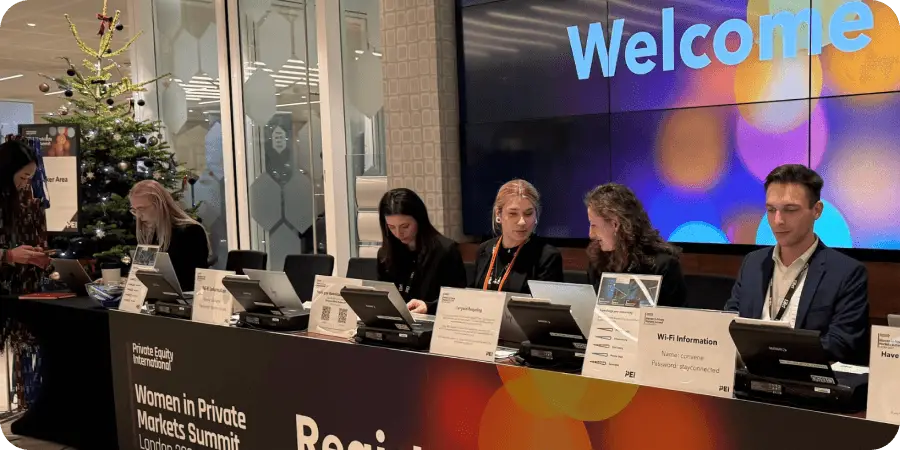
Onsite badge printing: The flexible option
Modern badge-printing machines have changed what can be done in event spaces. The technology has come a long way, and onsite solutions now match the quality of pre-printed solutions and can print in less time than it takes a host to find a pre-printed badge. This offers event managers much greater flexibility
How onsite badge printing works
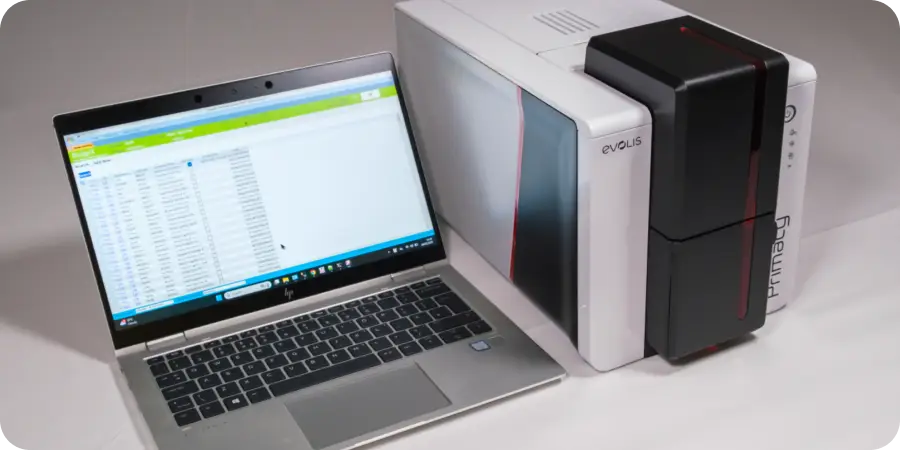
A complete onsite setup includes a laptop or tablet with badge printing software, one or more badge printers, attendee data from your registration system, and the right badge materials.
Good badge printing software, like BadgeX, can work with registration platforms like Eventbrite, Swoogo, Stova, Bizzabo and others to get attendee information in real time using API integration.
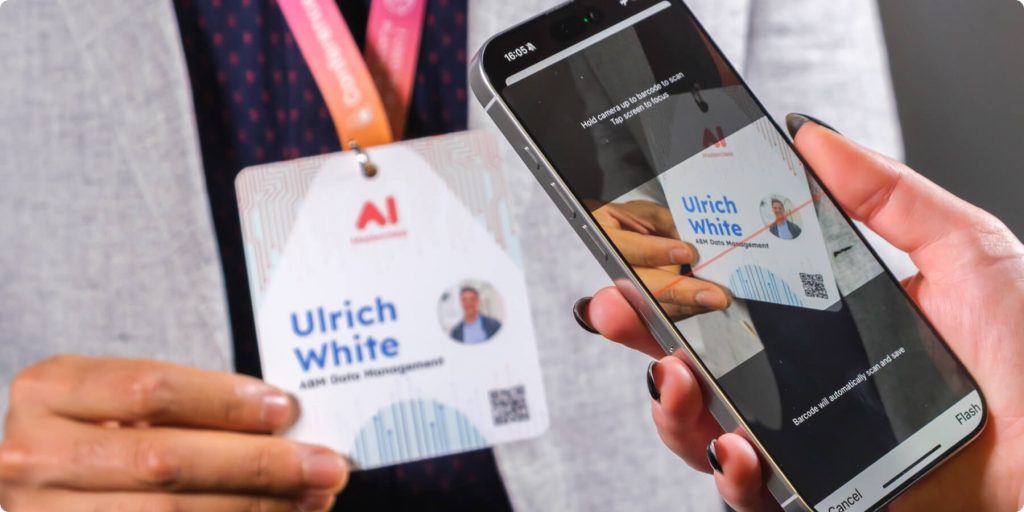
When someone checks in, whether they scan a QR code, have staff scan their code, or give their name, the system immediately prints their badge.
A name badge printer can print finished credentials in just a few seconds. Modern thermal printers can print badges in less than 6 seconds, and even full-colour inkjet printers usually finish in less than 10 seconds.
The badges can include all the same features as pre-printed ones, like logos, graphics, QR codes for tracking sessions, sponsor branding, colour-coded backgrounds, and information about attendees that can change. The only thing that limits you is what your badge printing machine can make.
Choosing materials for printing badges onsite
The materials you use for badges have a big effect on the final results, costs, and how attendees feel.
Standard thermal paper is the cheapest choice. Basic white thermal badge stock works with direct thermal printers and costs £20-£40 per thousand badges. The text is clear and easy to read. You need badge holders to keep the badges safe and to attach lanyards.
You can also use thermal paper labels. These can be printed with personalisation details like the name, company, and QR code, and then the label is applied to a pre-printed badge.
Pre-printed thermal stock gives a professional look. Thermal paper is used to print the full-colour design of your badge, including logos, borders, graphics, and event information. The name badge printer only adds variable data (names, companies, roles) onsite.
This hybrid method gives you the best of both worlds: a professional look and the ability to change things when you need to. Badges made this way look almost exactly like fully pre-printed ones, but they can still be changed at the last minute.
The trade-off is that if you have different badge types (e.g. colour-coded VIP badges, speaker badges etc) then you may have to have more printers to handle them.
Fold-over or butterfly peel-and-fold badges are a great all-round solution. They do away with the need for badge holders. These badges consist of a label twice the width or length of your finished badge. One side of the label is printed, which peels off and then folds in half, making them twice as thick (more like card) and easy to attach to lanyards using pre-punched holes. A popular choice for conferences seeking environmentally friendly solutions that don’t require holders.
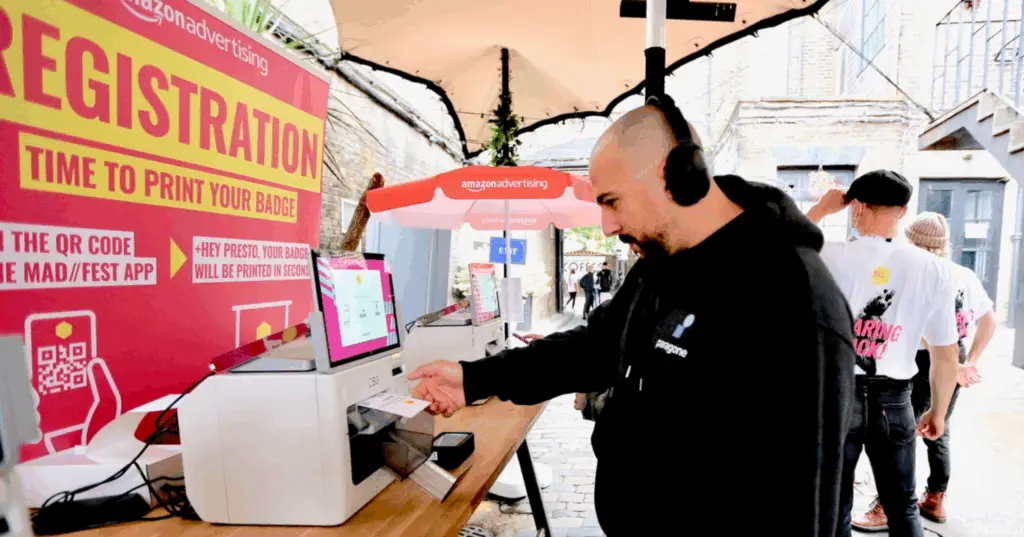
When pre-printed badges are still a good idea
Even though onsite solutions have their benefits, there are some situations where pre-printed conference badges are better.
It’s easy to pre-print guest lists for small events where guests can’t change them. These events rarely change much: a meeting with 30 executives, a client dinner for 25 VIPs, or a workshop with 70 people who have already signed up. Because of this, a ‘print on arrival’ solution is less beneficial. If there is the possibility of any changes, though, having one badge printing station on hand is usually a good idea for 50+ attendees.
Commercial badge printers may be the only ones who can make the finishing touches for high-end events that require a high level of presentation. When visual impact is more important than operational flexibility, foil stamping, embossing, unusual die-cut shapes, or speciality papers make the pre-printed approach worth it.
For companies with design teams that make complicated badges, pre-printing might be a better option. When your custom badge design features complex layered artwork that would be difficult for portable badge printing machines to handle, it makes sense to use a professional printing service.
When onsite badge printing is at its best
As events get bigger and more complex, the operational benefits of printing badges onsite become increasingly clear.
Event badge printers are essential for large conferences and trade shows. When hundreds or thousands of people check in at the same time, the ability to add more printing stations prevents delays. When multiple name badge printers work simultaneously, they can quickly process attendees because each station operates independently.
Events that require ongoing registration need the flexibility that only onsite systems can provide. If people can sign up for your event right up until it starts, or even at the door, your conference badge printer is a must-have. No deadlines and no awkward “sorry, you had to sign up by Friday” conversations.
Real-time printing is important for professional events that need accurate credentials. Bios of speakers change. Last-minute additions of VIPs. Update on job titles. Names of businesses change. With onsite badge printing, corrections happen right away. The system pulls up-to-date information and produces unique name badges for each attendee based on their most recent information.
Multi-track conferences with different badge types benefit the most. Different designs and information are needed for staff badges, speaker credentials, exhibitor passes, press badges, and general admission badges. Badge printing software can automatically pull the correct template for each attendee type, ensuring everyone receives credentials formatted correctly.
What if the venue wifi goes down during your event? You’re always better off planning for this eventuality. Systems that depend on wifi being consistently available are inherently flawed. Imagine a situation where your queue is mounting up while you’re being told by the venue that the technician you need isn’t onsite yet, and you know what we mean here.
Systems like BadgeX combine the benefits of cloud computing with the resilience of working offline when necessary by distributing the attendee database as local copies on each machine. That way, the registration desk is still operational even if the wifi isn’t.
The hybrid solution: Using both methods together
Experienced event planners can use both pre-printed and onsite badge printing to get the best of both worlds.
A common hybrid model at events for under 200 pax is to print badges and lanyards in advance for VIPs and keynote speakers, who are sure to attend. These high-end guests receive custom badges that are available before registration opens, and may be made with special materials or finishes that your event badge printer can’t replicate.
In the meantime, use onsite badge printing equipment for regular registrations, walk-ins, corrections, and reprints, keeping the look professional and consistent while still allowing for operational flexibility.
This method offers many benefits. VIPs feel looked after when they see their special credentials waiting for them at a separate reception desk. The registration system can quickly handle a large number of people with name badge printers. You cut down on waste while maintaining the design’s quality where it matters most. And you’re safe from the last-minute changes that always ruin plans printed only ahead of time.
Conference Badges often use this model for larger events, from 500 person technology conferences to major globally significant events like COP and the King’s Coronation. We use our BadgeX software and professional badge printing machines to make badges for everyone else on-site and provide printed lanyards to go with them. This makes the experience smoother while still allowing for personal touches
The crossover point for events is usually somewhere between 200 and 500 people. For lower numbers, pre-printing badges or a hybrid solution might be cheaper and easier to do. Onsite badge printing equipment is a better value because it is more flexible and makes less waste
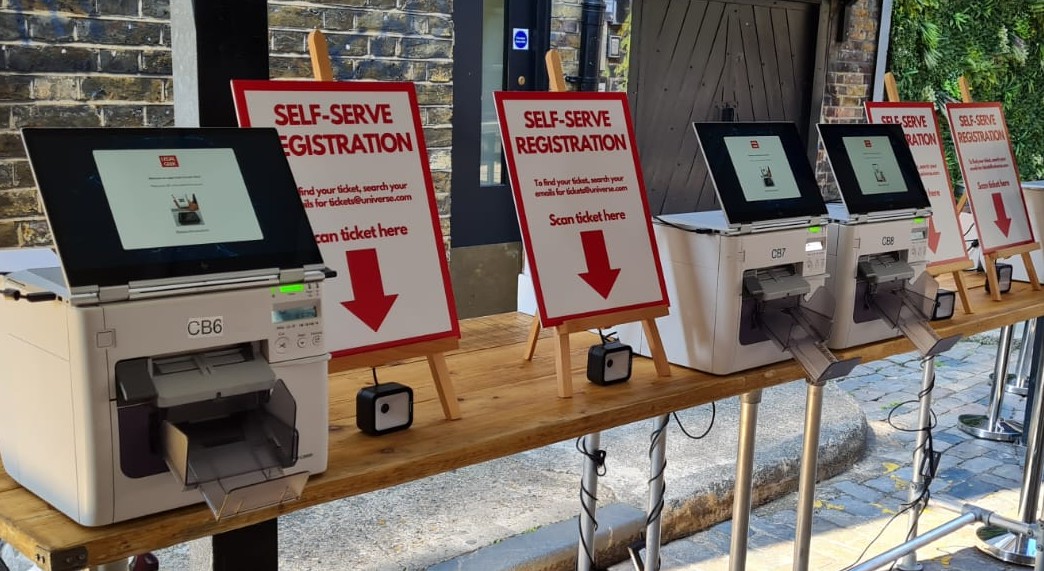
Things to think about when making your decision
There are a number of clear factors that should help you decide between pre-printed and on-site badge printing solutions.
Is my registration list still subject to significant change? If registrations close a week before the event and there aren’t many changes expected, pre-printing becomes possible, whereas event badge printers are very useful if you need to confirm attendees days before the event or let people sign up at the door.
- What first impression do we want to give attendees? Printing on arrival looks more modern – ideal for a technology brand, for example. Whereas for an awards dinner, having a prestigious looking badge printed in advance may feel more appropriate. Also consider the impression visitors may have if their badge is not found – if you think that will leave a poor impression, consider onsite badge printing.
- Will my budget support both options? Onsite badge printing usually becomes the cheaper option for larger events. The more badge printing stations you have, the quicker you’ll get delegates in. However it may also involve more people to support it, which can involve more travel, overnight accommodation, etc.
- What are my event’s sustainability targets? Onsite badge printing generally means fewer wasted badges.
- Is registration at multiple locations? Printing on arrival is the clear winner if it is. You might have registration desks at the hotels or local airport to take the strain off the venue’s registration desk. Using a joined-up on-demand badge printing system makes this a far more viable option than printing multiple sets of badges
Am I anxious about the technology? You need to be somewhat technically skilled to run badge printing machines and keep them operational. Can your employees fix printer problems? Will you have technical support on hand? Is your internet connection stable? If these questions make you anxious, either work with a full-service provider or look into easier pre-printed options.
- Do I need a particular type of badge? High security badges or special finishes may dictate that the badges are produced in advance, due to limitations of onsite technology.
- How important is it to minimise queues? For most events, queues are a cost. When you look at the cost per minute of running your event (venue hire, staffing, and divide up all the fixed overheads), it makes no sense to lose a chunk of time to having attendees wait in line. If you have exhibitors, that’s lost meetings. And it doesn’t start the event off well. So normally we’d suggest you choose the option that means the shortest queue, which is usually print-on-arrival. That said, some organisers prefer for their event to look popular, and for that to happen sometimes a queue is part of the experience!
Important technology specifications
When looking at badge printing machines to buy or rent, a number of specifications affect how well they work in the real world.
The speed of printing can change a lot. Basic thermal name badge printers can print one badge in one to two seconds. It takes 3 to 5 seconds for thermal transfer models. It takes 6 to 10 seconds for full-color inkjet badge printing machines to work. It takes 30 to 45 seconds for colour direct-to-card PVC printers. Make sure your printer speeds match the number of checks you expect.
The size of the badge limits the design options. Most badge printers can print badges that are the same size as a standard credit card (CR80). Some can handle larger sizes, like A6 (105 x 148 mm), which lets you make bigger designs that can fit schedules, maps, or a lot of sponsor branding.
Support and reliability are very important. Conference badge printers that are made for professional use are built to last, can handle a lot of work, and can recover from small problems without any trouble. Consumer-grade equipment breaks down when put under pressure at events. Always buy from suppliers who really know events.
The talk about sustainable badge printing
More and more, badge printing decisions are based on environmental factors. There is no waste from no-shows when badges are printed onsite because every badge printed is used. This level of efficiency fits with the company’s commitment to sustainability and appeals to attendees who care about the environment.
Pre-printing always makes too much. Even conservative overprinting “just in case” makes waste. The name badges, lanyards, and holders that weren’t used for events are both bad for the environment and money that has already been spent.
Conference Badges has eco-friendly badge options like compostable badges, seed paper, and badges and lanyards that can be recycled. These options work with both pre-printed and onsite methods, but onsite printing’s zero-waste operational model has built-in environmental benefits.
Looking ahead
The world of badge printing is always changing. Today’s technology gives us more options than ever before. For example, there are ultra-portable thermal name badge printers that fit in a backpack and run from battery power and advanced direct-to-card systems that can make ID cards that look just like those made by professionals.
No matter if you choose pre-printed badges, onsite badge printing equipment, or a mix of the two, the goal is always the same: to make professional credentials that help people network, control access, and represent your event brand well.
We’ve improved our badge printing services over the years by working on thousands of events. Our BadgeX software can run everything from simple self-service setups with basic thermal printers to complex, fully managed operations with advanced multi-station setups. We work with you to develop the best solution for your needs, whether that means providing pre-printed custom badges with lanyards, onsite full badge printing systems, or a mix of the two that strikes the right balance between quality and operational efficiency.
It’s not about finding the “best” way to print badges; it’s about finding the best way for your event. Tailoring it. Think about your situation, weigh the factors we’ve discussed, and choose the method that best fits your goals, abilities, and attendee expectations.
Attendees often get their first physical contact with your event via your conference badges, and that reflects on the event and, even more importantly, your brand. Make it count. Need help with your event tech and want to book a demo with our Badge Scanner, an exhibitor lead capture app?
Need help from an expert with badge printing solutions? Get in touch with Conference Badges to discuss what you need and learn how our badge printing technology and services can improve your next event.